Category: Video
(video) – Fighting with ART!
GONG FIGHT armor – principal build test
The sound inside the kit is kind of glorious, but I think during a fight it will be hellaciously loud. Might need to hand out earplugs to the fighters. I’ll be working on arm protection next. And maybe some smaller noisemaking items.
GONG FIGHTS – helmet test
It works. More to come.
Veering off into left field – to build a marimbula
This is a long way from xylophones and propane-tank drums, but I’ve really enjoyed building cajóns and – for the first time – a marimbula.
The marimbula is a Caribbean instrument, descended from the African kalimba, and generally functions as a bass. As you’ll see in the video at the bottom of the post, I first experimented with a 6-key marimbula built onto the back of one of my cajons, just to figure out the basics of construction.
This one is a 16-key marimbula – which I’ve decided has about three too many bottom-end keys and perhaps one too many high-end keys, as the sound quality falls off quite a bit at the ends of its scale. Next, I might try building one like a piano keyboard (with two layers of keys in white and black) centered in the middle of this scale.
The tuning has been kinda challenging – I finally settled on D – but I’m tuning it slowly by ear because the digital tuning apps can’t handle all the overtones it puts out. Anyway, it’s a helluva lot of fun to play – particularly on a nice, resonant wood floor – because it’s easy to play, and the notes send vibrations through your butt and up your spine. I take great satisfaction in building instruments that create physical joy along with pleasant music.
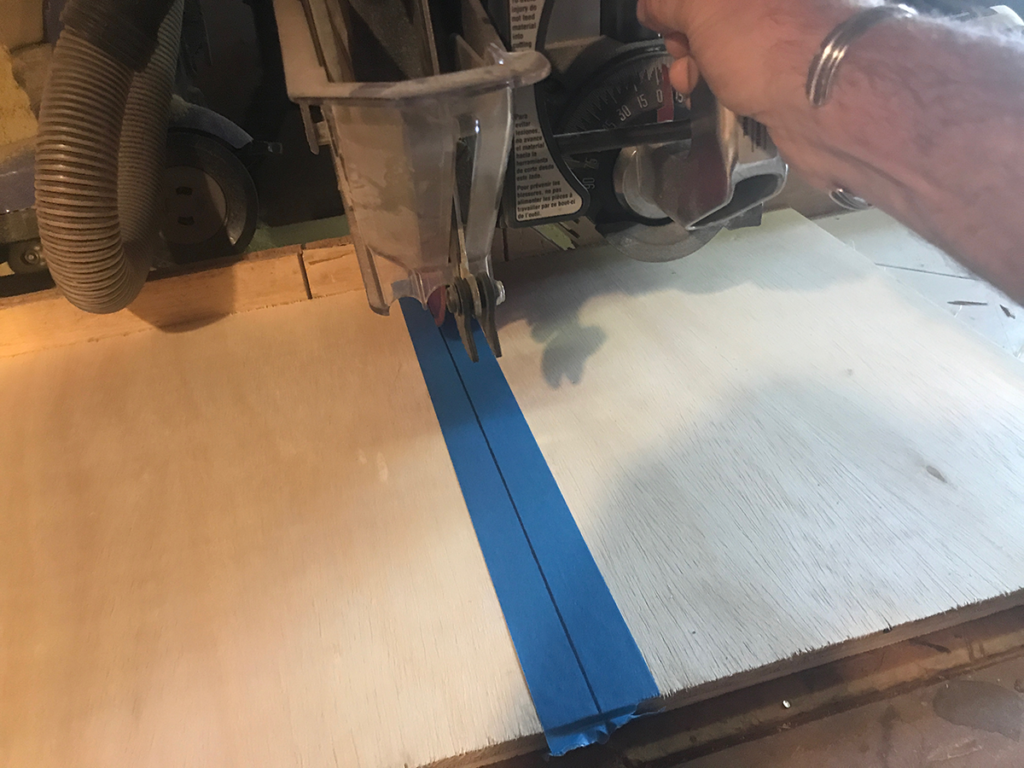
I use white birch finish plywood. I cut the box pieces through masking tape, which makes for clean cuts by keeping the blade from shattering the delicate veneer. 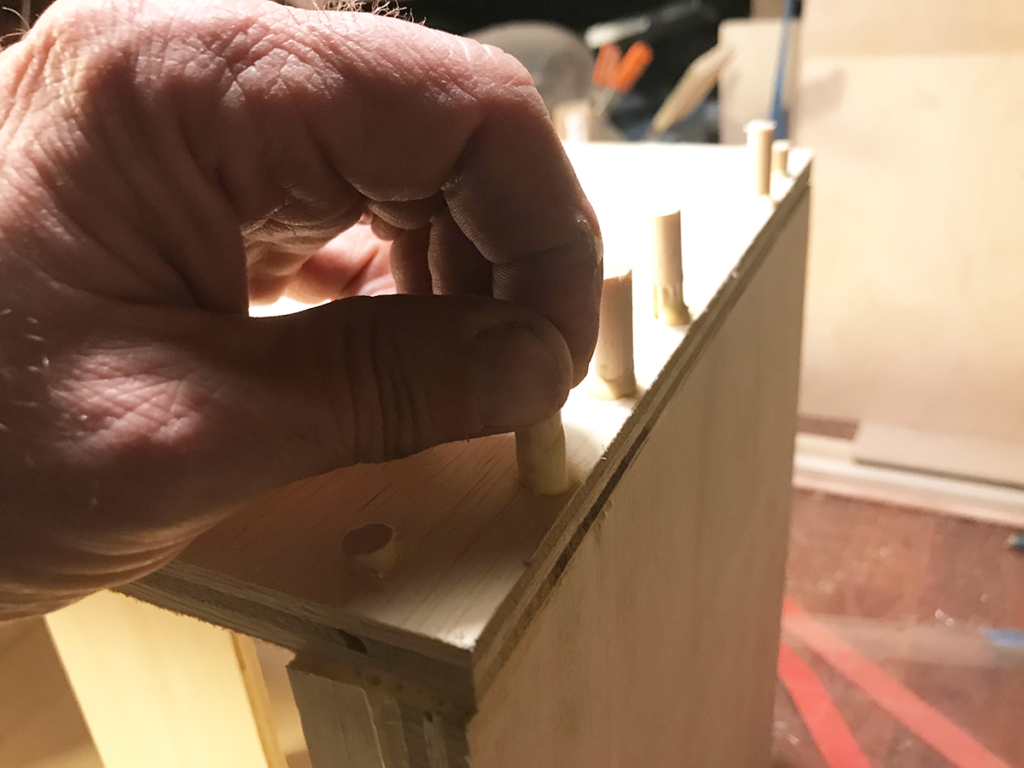
Dry-fit the pieces, then drill for pegs. I cut my own from 5/16″ dowels, which makes for cleaner joins than you get with factory-made pegs. 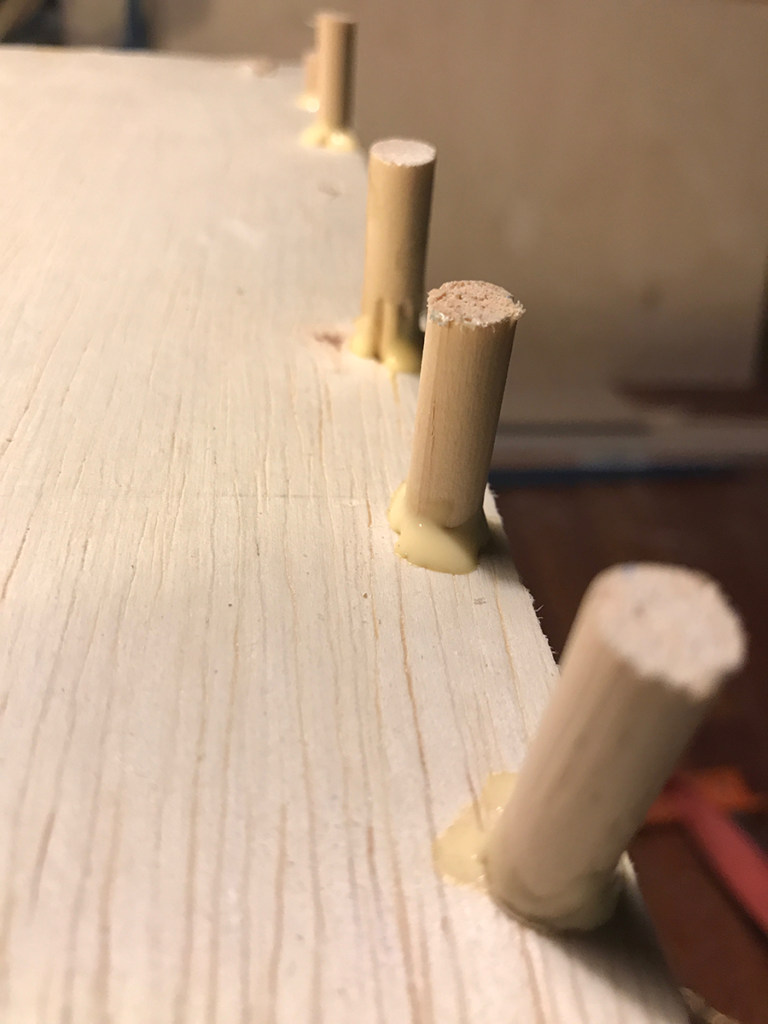
Glue all the plywood points, then add some glue to the peg holes … 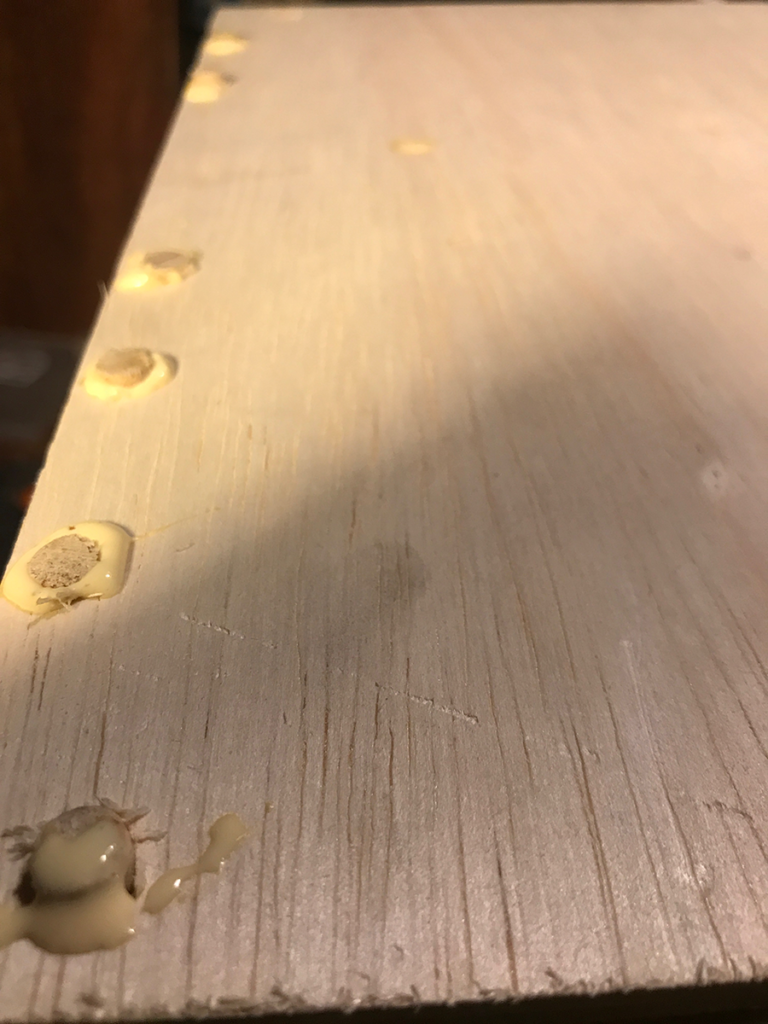
… and drive them all in. I’ll sand off the excess to make them flush with the surface when everything is dried. 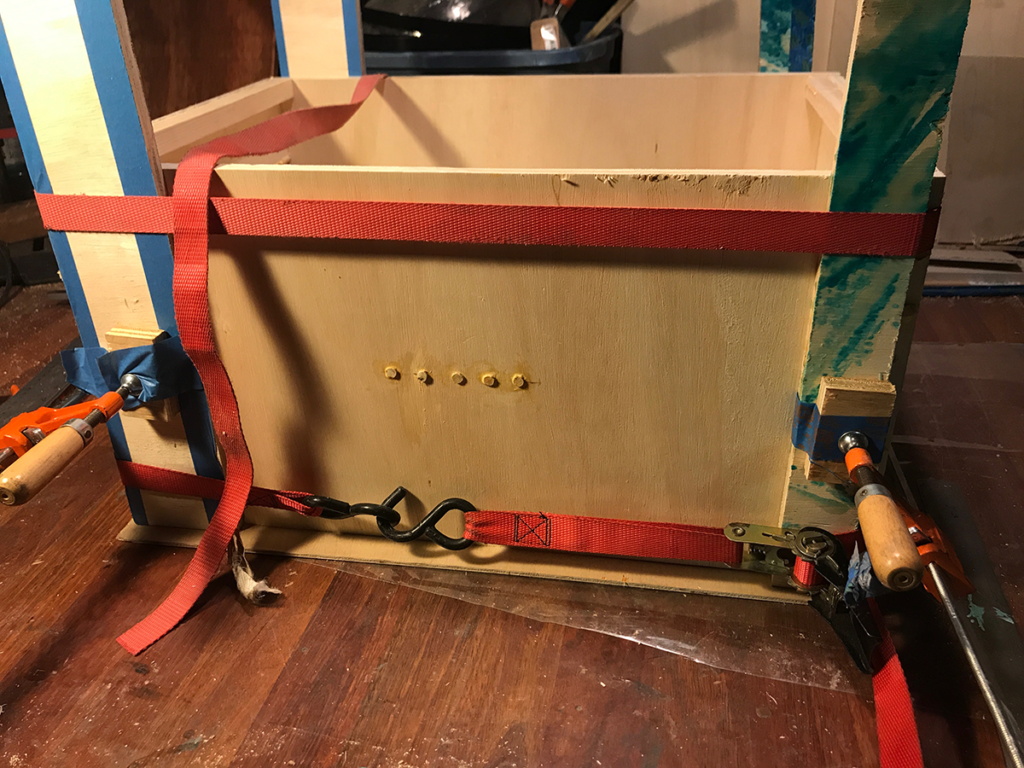
Being short on (pricey) carpenter’s bar clamps, I use the two I have, then augment with ratchet straps. The vertical chunks of scrap plywood keep the straps from damaging the veneer. 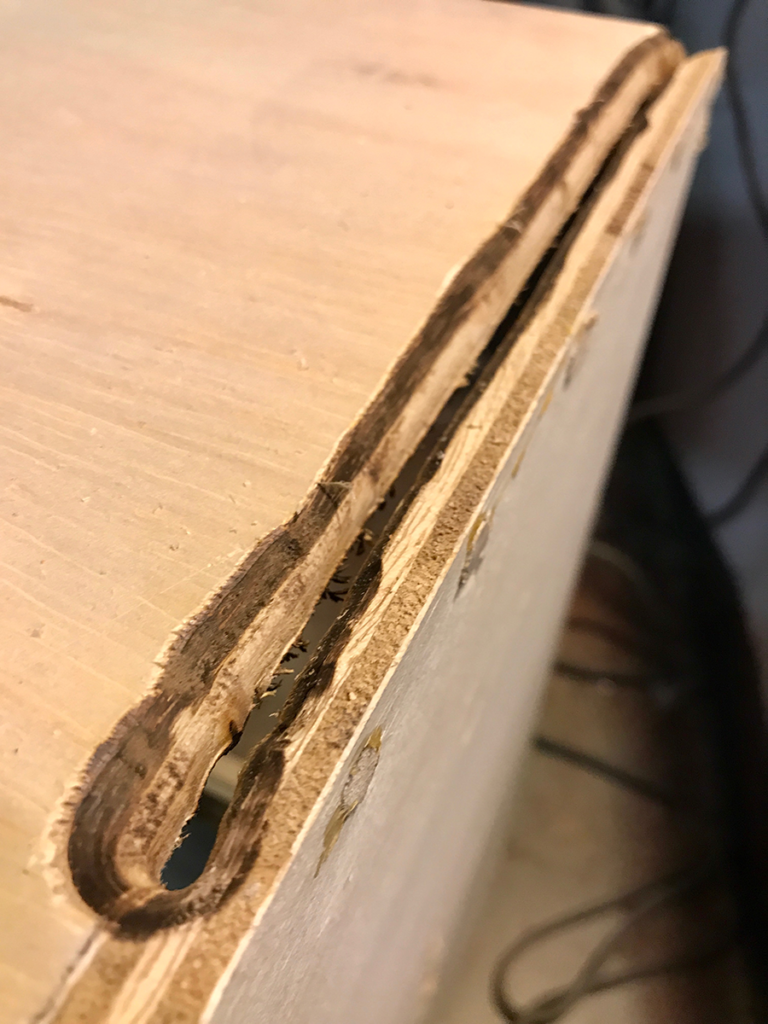
This is deeply embarrassing as well as horrible-looking: I failed t set up the router correctly, then dragged it straight through the face of the box instead of nicely rounding the corners. After much cursing and shouting, I just capped the whole gashed end with another layer of plywood. 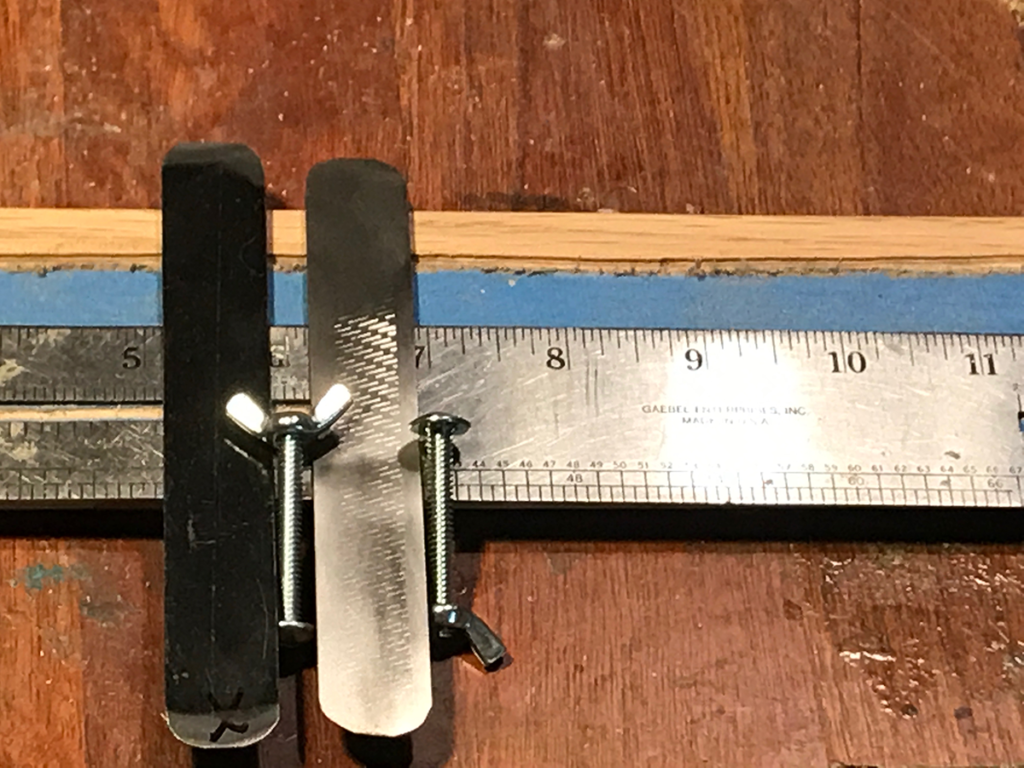
Laying out the keys and the bridge pegs, and trying to decide whether to use the black anodized finish found on these scraps of spring-steel shipping strap, or polish it and use the moiré pattern left by the tools. 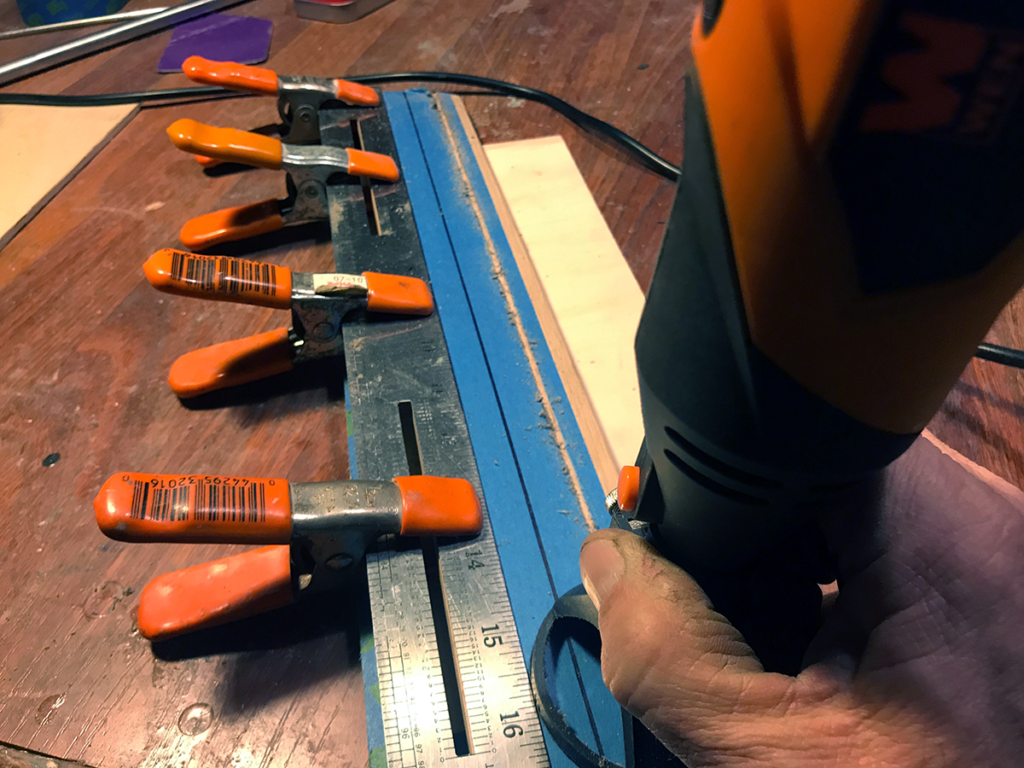
The bridge is a strip of red oak. I clamped a ruler to it to guide the router, which I used to cut a groove for the bridge’s nut bars (terminology?) to sit in. 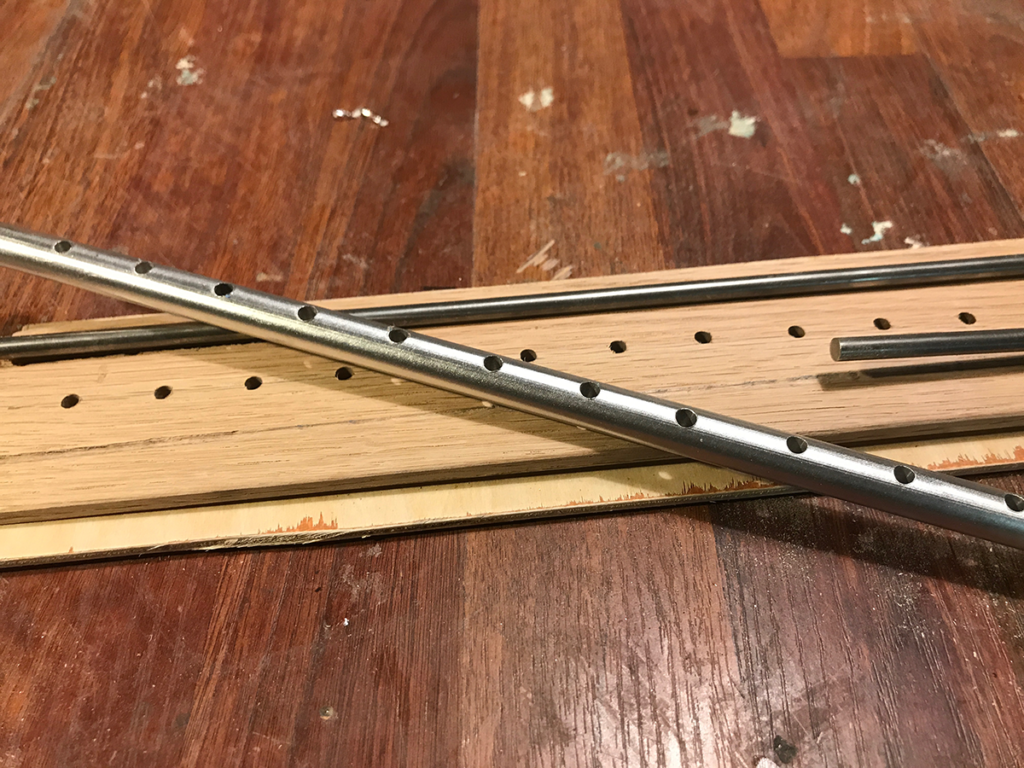
The completed bridge pieces – red oak, stainless-steel nut bars (which the keys will rest on) and a carefully-drilled-out rod of aluminum for the bridge, which will clamp the keys down to the nut bars. 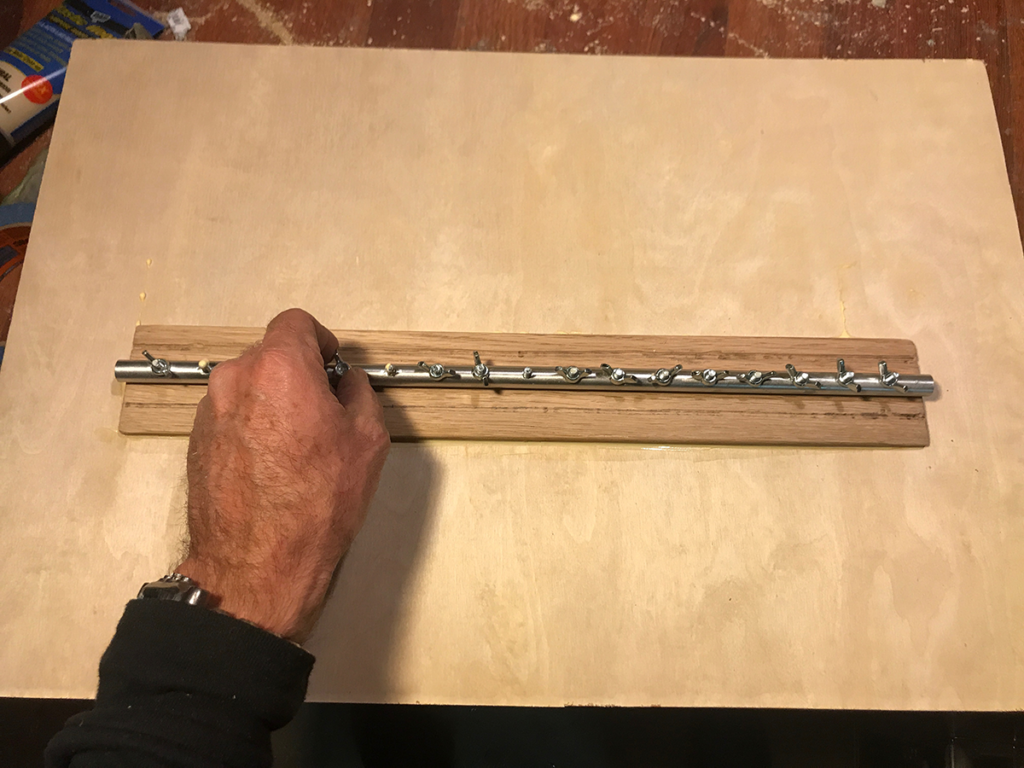
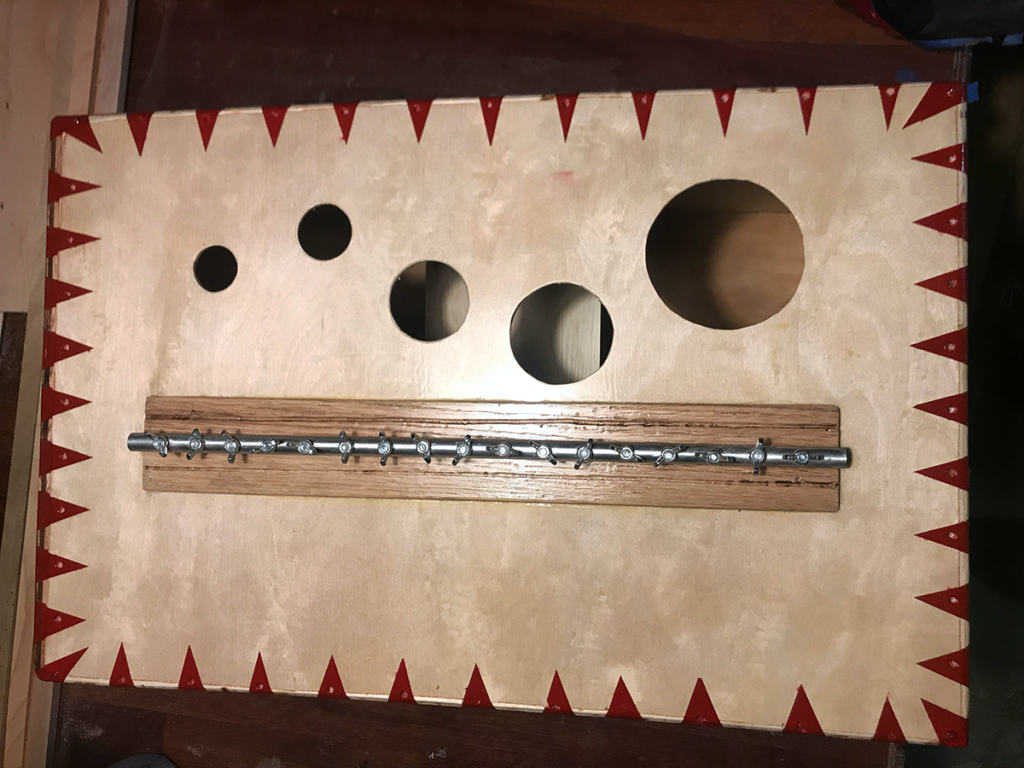
I cut a piece of 1/8-inch birch ply for the face, then drilled it out and mounted the bridge assembly (traditionally called the harp) to it with machine screws and wing nuts. 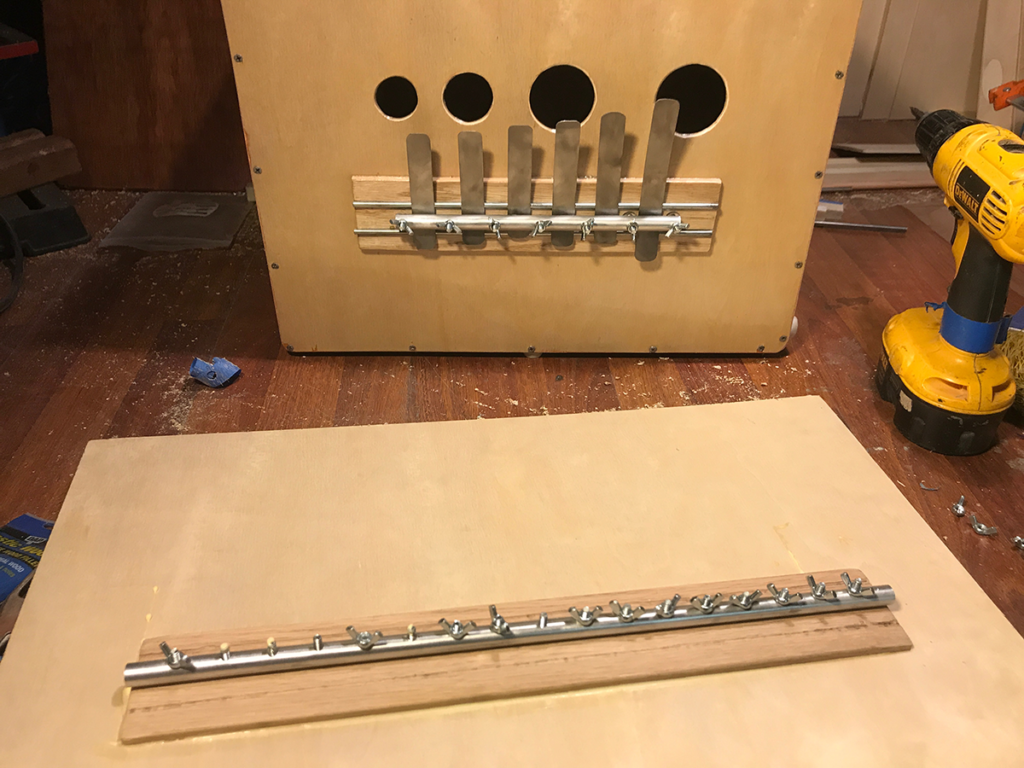
Here’s a comparison of the 16-note bridge with the 6-note bridge I mounted on the cajon that I used as a test mule. 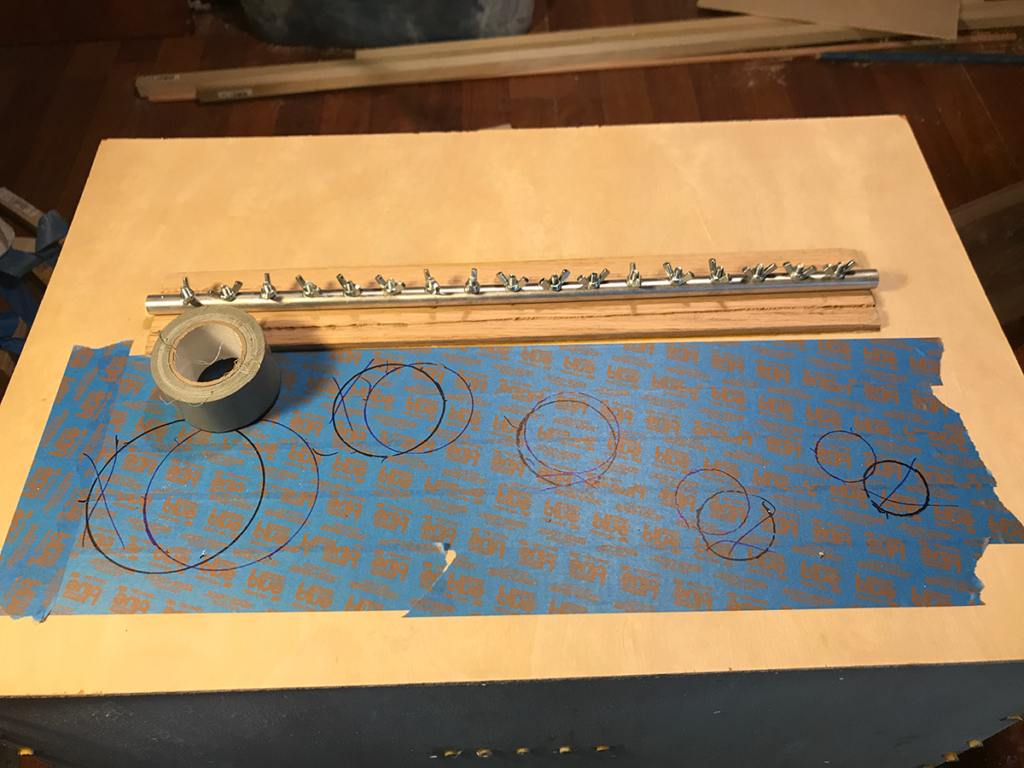
After masking the face to prevent splintering, I laid out the sound holes, then cut them with a keyhole saw (for the smaller ones) and a roto-zip bit on my knockoff Dremel for the two largest ones. 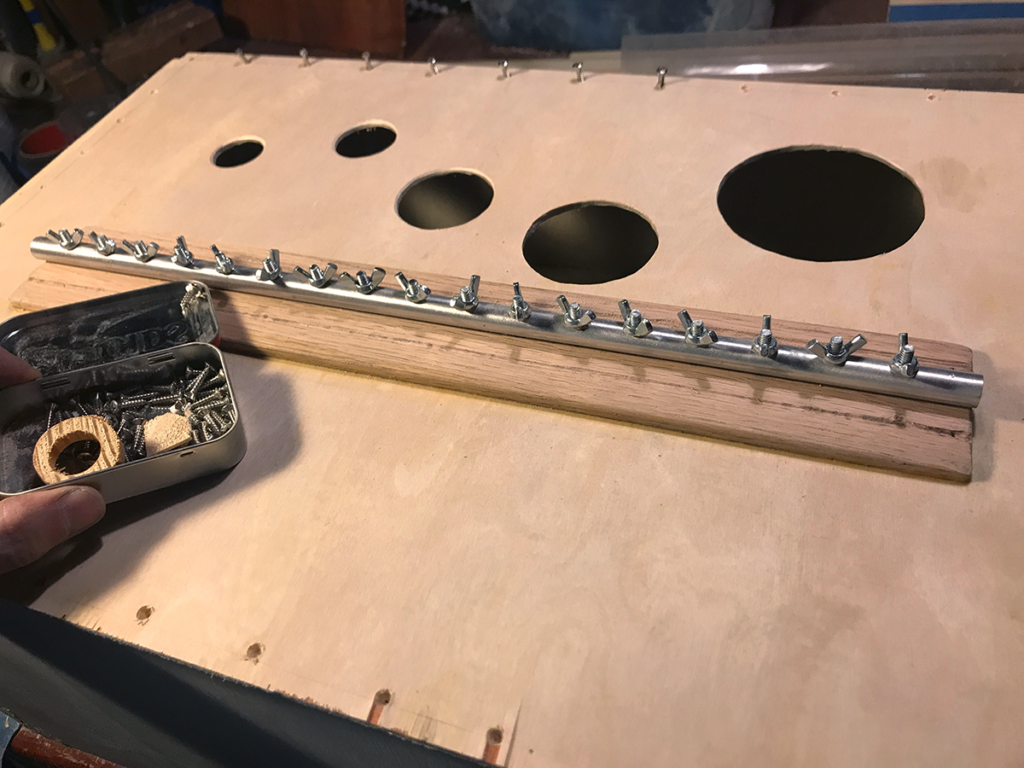
Next, I drilled all the holes for the screws – way too many, it occurred to me way too late, but the large number of screws actually wound up helping the overall visual design. 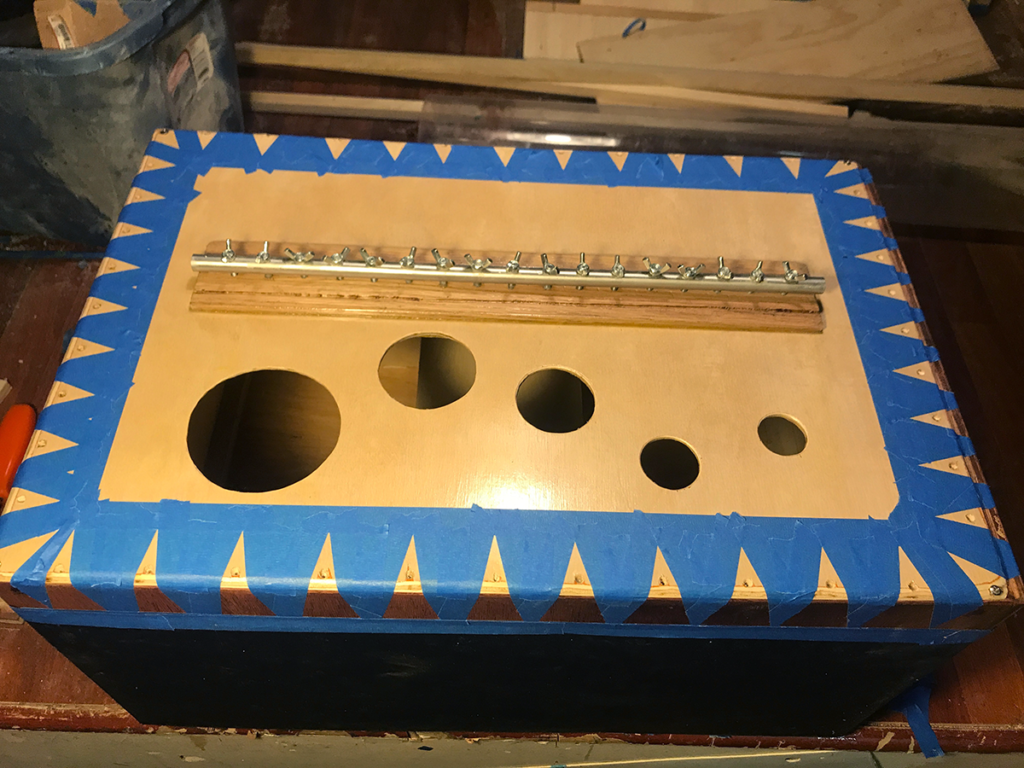
I masked off the edge for painting. 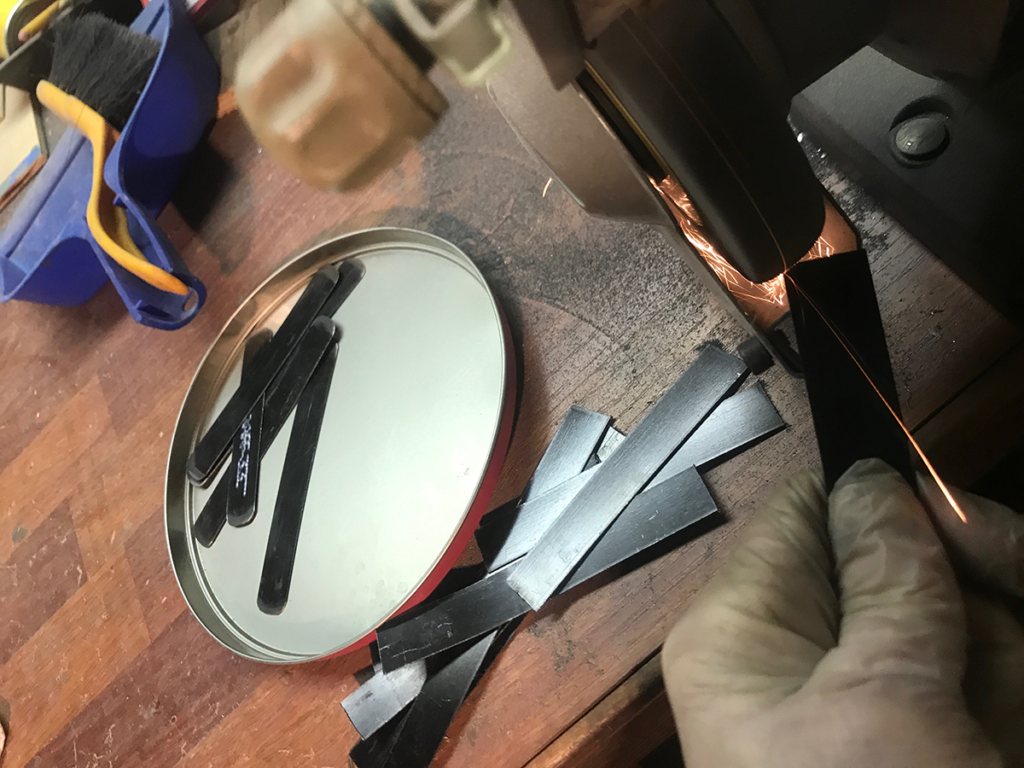
Earlier, I cut the shipping strap chunks into rough lengths with an angle-grinder, then ground the corners round … 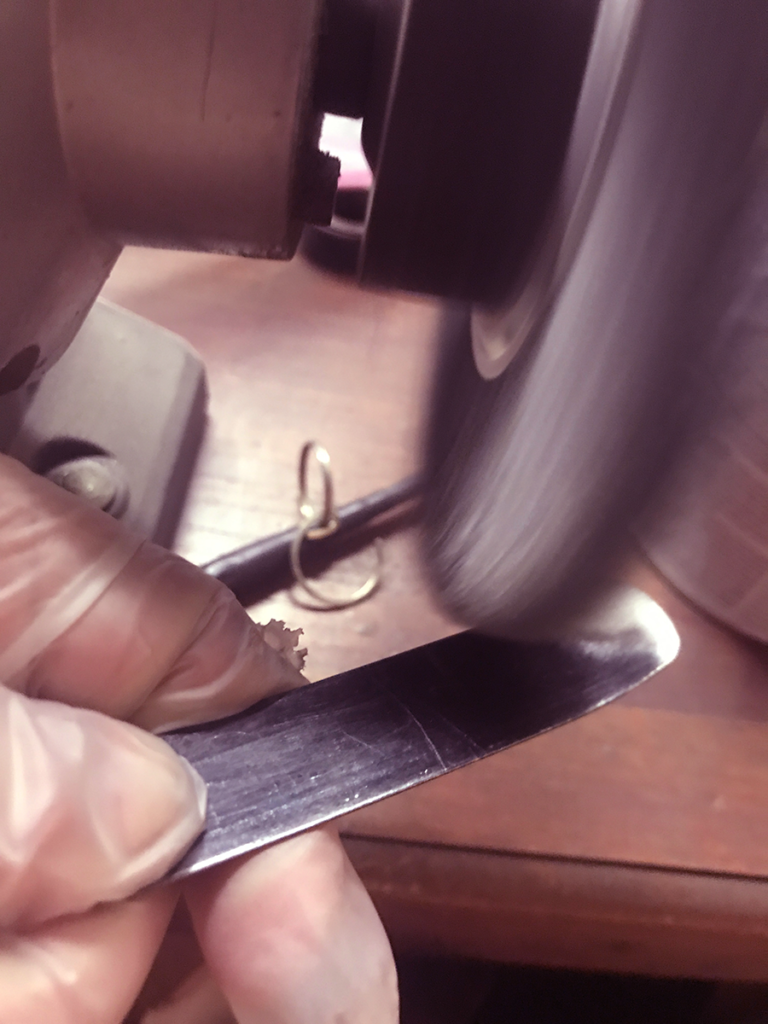
and smoothed them with a wire wheel. 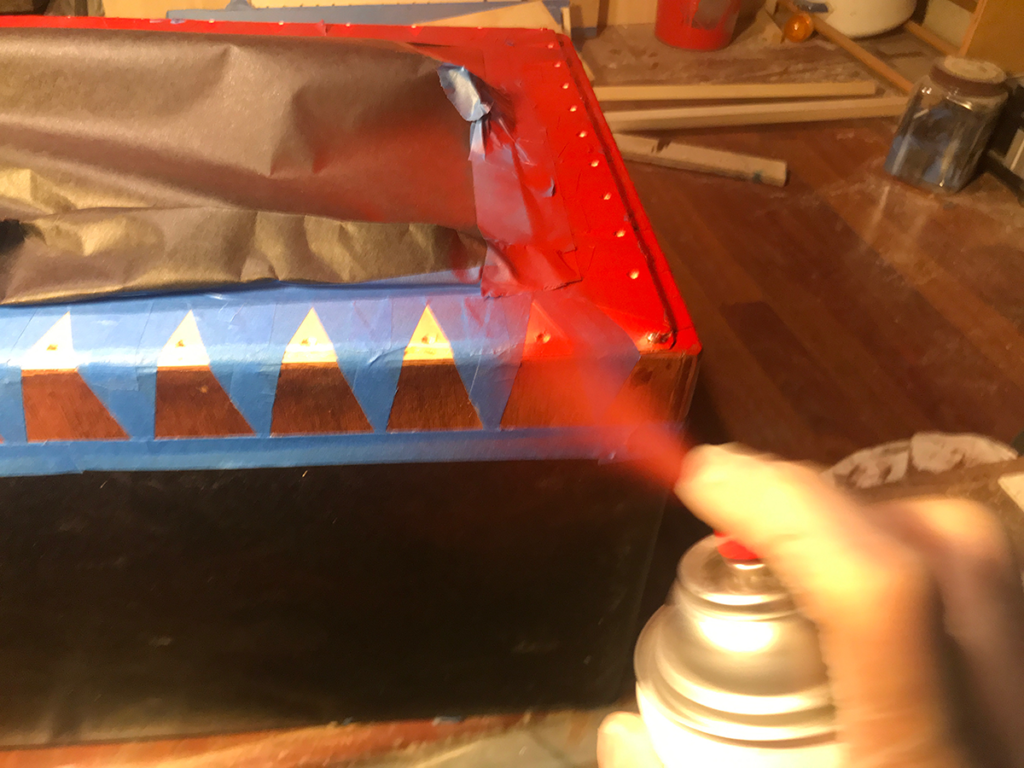
Shot the masked instrument body with red enamel (a favorite) 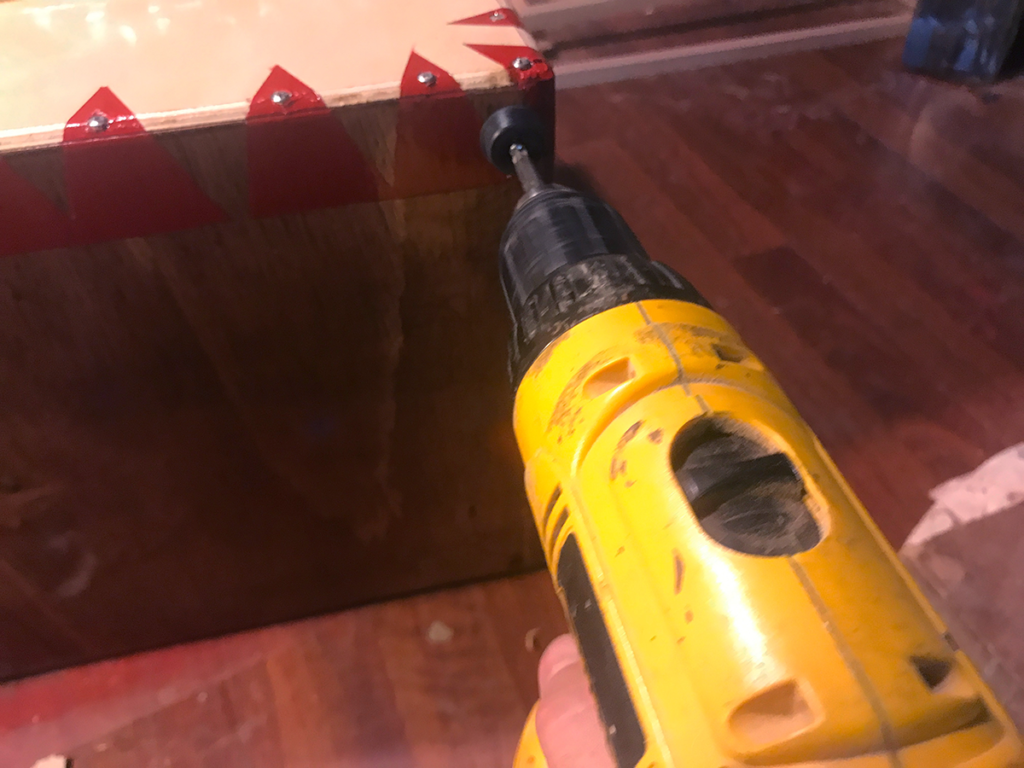
… and screwed on some little rubber feet to protect both the floor and the wood, since you’re meant to sit on the instrument to play it. 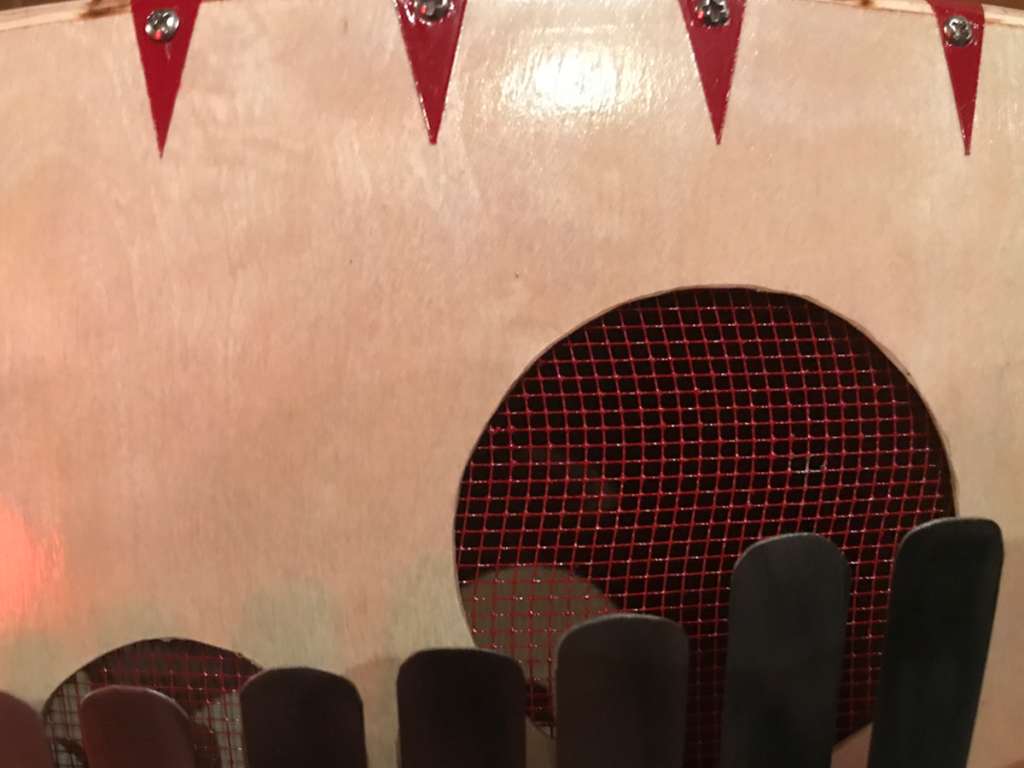
To add a little bit of drama (and filter out toys, crayons and Cheerios that younger musicians might be tempted to insert in the sound holes, I spray painted some metal fabric and glued it to the backside of the face with Liquid Nails so it wouldn’t buzz when the instrument is played. 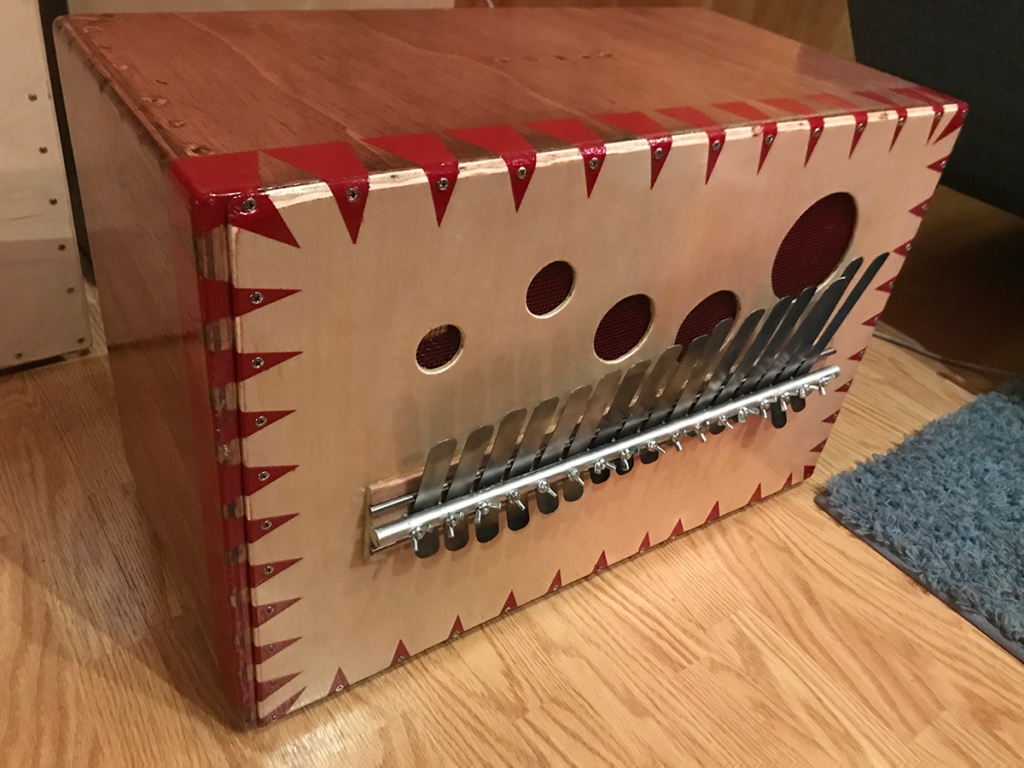
Et voila. 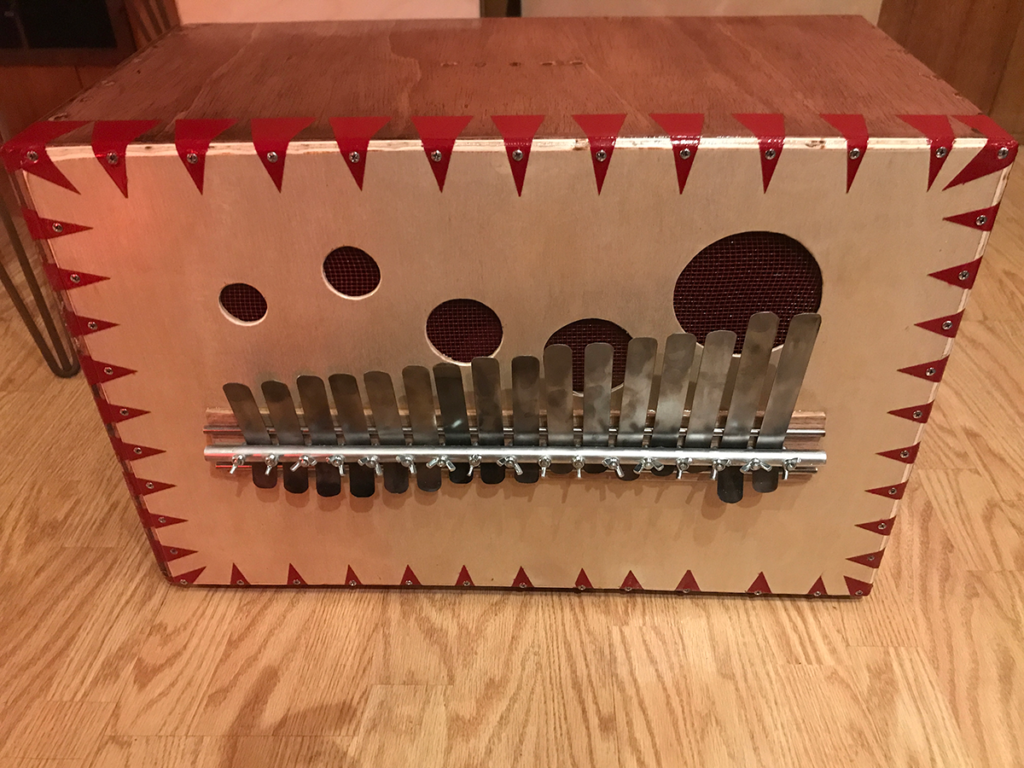
Video: XyloVan at Burning Man 2014
A little sampler of the hundreds of people who played XyloVan at Burning Man, 2014.
XyloVan walkaround – L.A. Decom 2012
XyloVan in full voice – L.A. Decom 2012
Be warned – it’s LOUD. And that makes us happy.
Drumming on XyloVan at L.A. Decom 2012
Contemplative jam at L.A. Decom 2012
Burning Man 2012: Burn Wall Street – and torch that Egyptian god while you’re at it
At some point – say, \next year – we’ll probably quit aiming a camera at the same damn spectacle that everyone else is videoing and actually absorb a burn face-to-face with open soul, unfiltered by a 2-inch screen.
Until then, we’re happy to share these videos of Burn Wall Street and the Anubis burn:
Word from a friend in the Rangers was that the Anubis pyro show originally belonged to Burn Wall Street – but that the Burning Man Organization (BMORG or, simply, the Borg) reaappropriated it because of unspecified unreadiness on the part of the BWS crew.
It was a fine show:
Contemplative Laura
Laura – a multiinstrumentalist who dropped by to discuss XyloVan mallet technology found a mood:
Thursday night jam
Mikaal, Hunter and a friend get into a groove in Swing City:
Rocking the mallets at Lucidity Festival 2012
Everyone brings something glowing and unique to XyloVan.
Little kids, drunks and professional percussionists hammer at the keys in a zillion different ways. People play “Chopsticks” or “Star Wars” or “Mario Bros.” or “Claire du Lune.” They goof, explore and jam.
Their music is as diverse as their faces and lives.
But the beauty of the thing is that once they start to play – without fail – every single XyloVan-ist goes to the exact same place: a moment of personal stillness and concentration where they are completely focused on the sound their hands are making, the vibrations in time and space that make up their personal experience at that very moment.
It’s a place of utter clarity, fluidity and dynamic tension. And it is invariably beautiful and humbling for us to watch.
So – these are the videos from Lucidity Festival. If you spot yourself playing anywhere in these videos, please say hi in comments below, tell us where you came from, what kind of music you play in the “real” world, and why music is important to you.
And from the bottom of our grubby hearts, thanks to everyone who played. You are inspiring, powerful and generous with your energy. We’re really glad to have met you all and we’ll see you again very soon.
Raoul’s lucid dream
I kind of want to dedicate this set of dispatches from Lucidity Fest 2012 to Raoul, a little, sparkly-eyed older Mexican fellow who strolled up at like 2 a.m. Sunday and reminded me of the power of transformative encounters with new music.
He had never seen anything like XyloVan. He kept saying, “This is … amazing” and shaking my hand – and basically he got sucked in so hard to the sounds that he could make with our van (little old him!) that he insisted on pulling up a patch of grass and trying to sleep with us.
He was super-sweet, and finally got up the courage to plink away at the keys for a few seconds. I didn’t see him for the rest of the event, and went looking for him among the late/early Dubstep stage crowd or the fire dancers, but he never turned up.
Anyway, his deep enthusiasm for the van and the music you all were making really endeared him to me. Thanks for showing me a new definition of joy, bro. Great meeting you, and maybe I’ll see you at next year’s Lucidity Fest.
Chill time
Had a little party on the van’s roof deck with Marty (left) and Crystal (right) listening to Nick down below playing keys in an impromptu jam with whoever that is on stage.
Calm, still, reflective and in the end quite revelatory. This is the atmosphere for lucid dreaming.
The hood trio
These three had a fantastic time hammering away on Keyboard #4 and bending it to their will. The gentleman on the right with the flashlight seems to want to help …
What is the sound of a XyloVan wash?
It sounds a little like this:
Music in the night
The beauty of sharing a huge musical mutant vehicle is that – at any moment – something like this can happen:
(EDIT: These blanks were once embedded Facebook videos. I quit the platform in 2018 for reasons. Sorry/not-sorry.)
… or this …
… or this …
… or this …
Thanks to THAT Damned Band, Titanium Sporkestra,
, and all the musicians – trained, wild and accidental – who breathed life into XyloVan when we weren’t around to enjoy. You’re the reason we built it, and you’re welcome to play it any time you like.