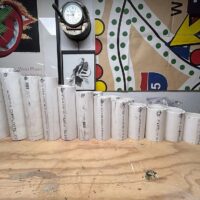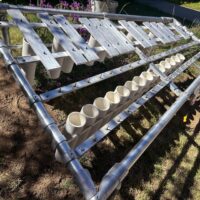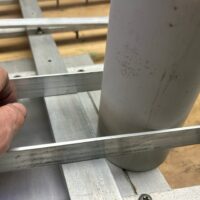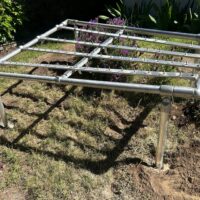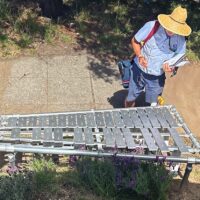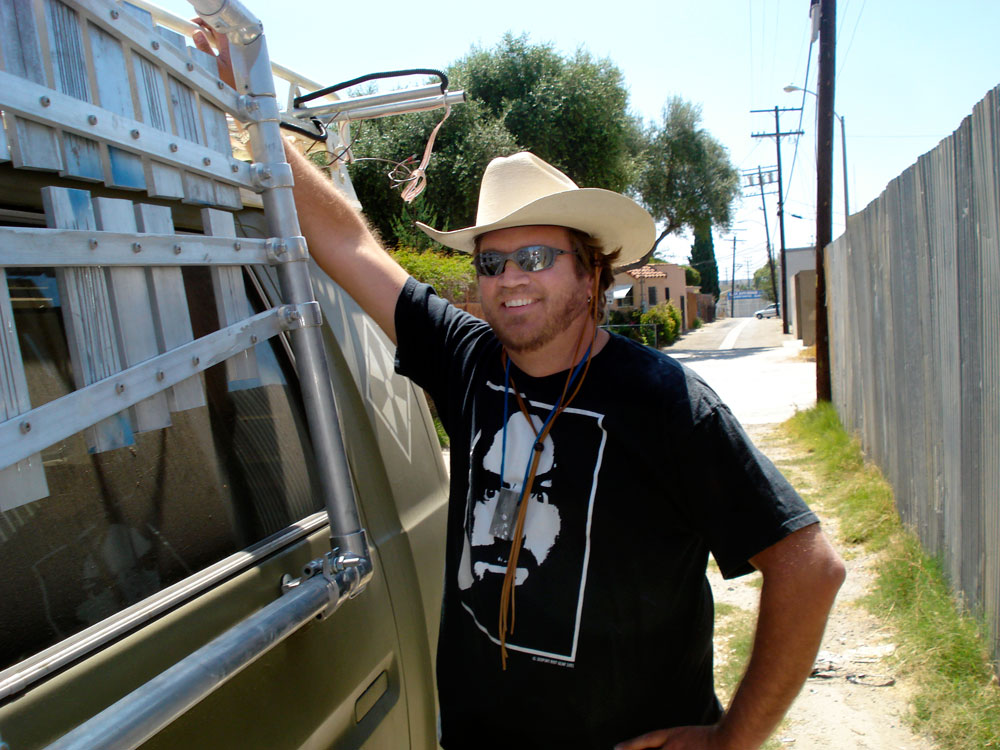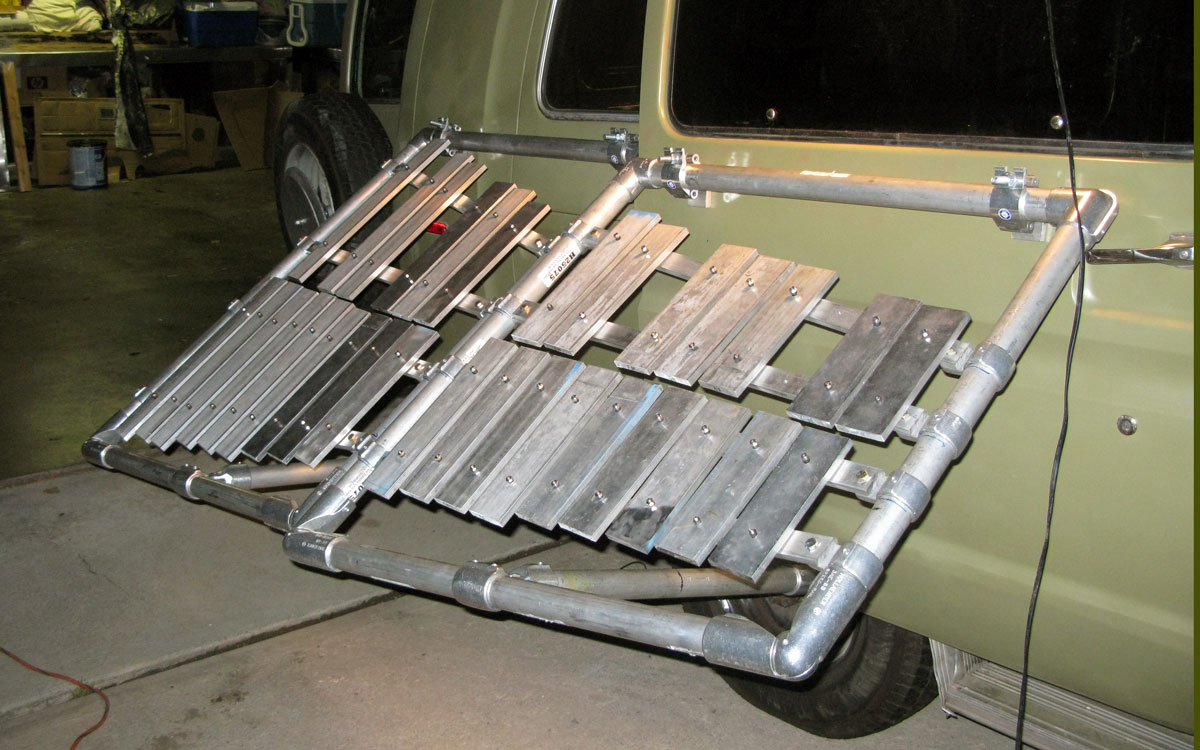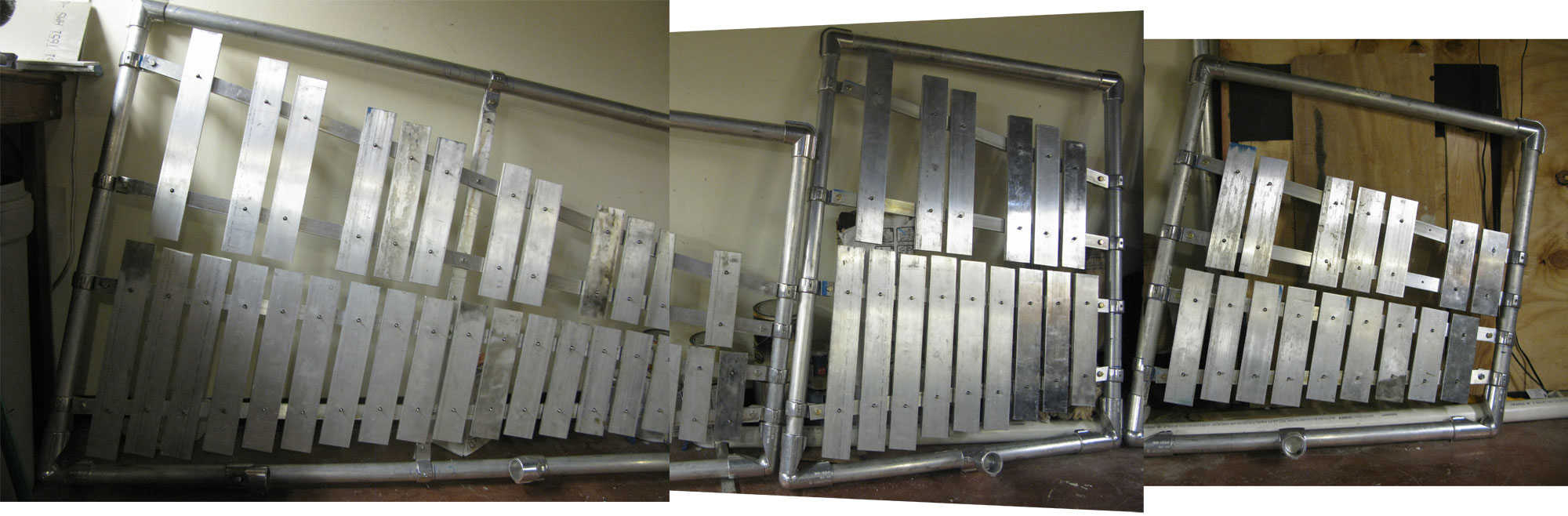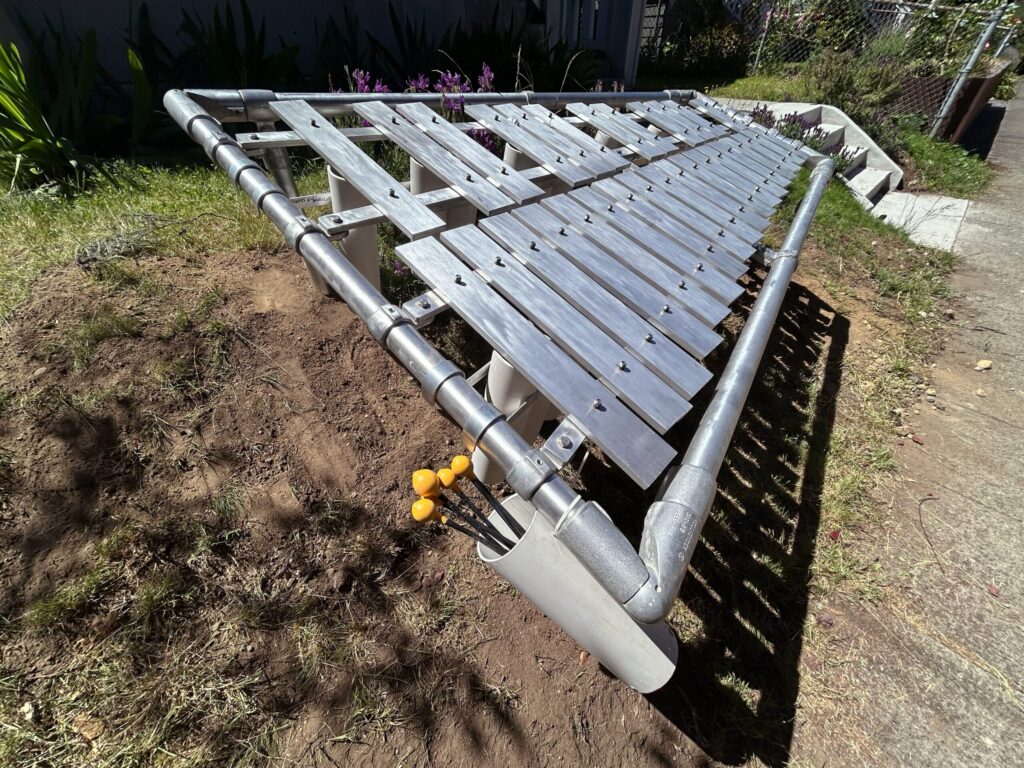
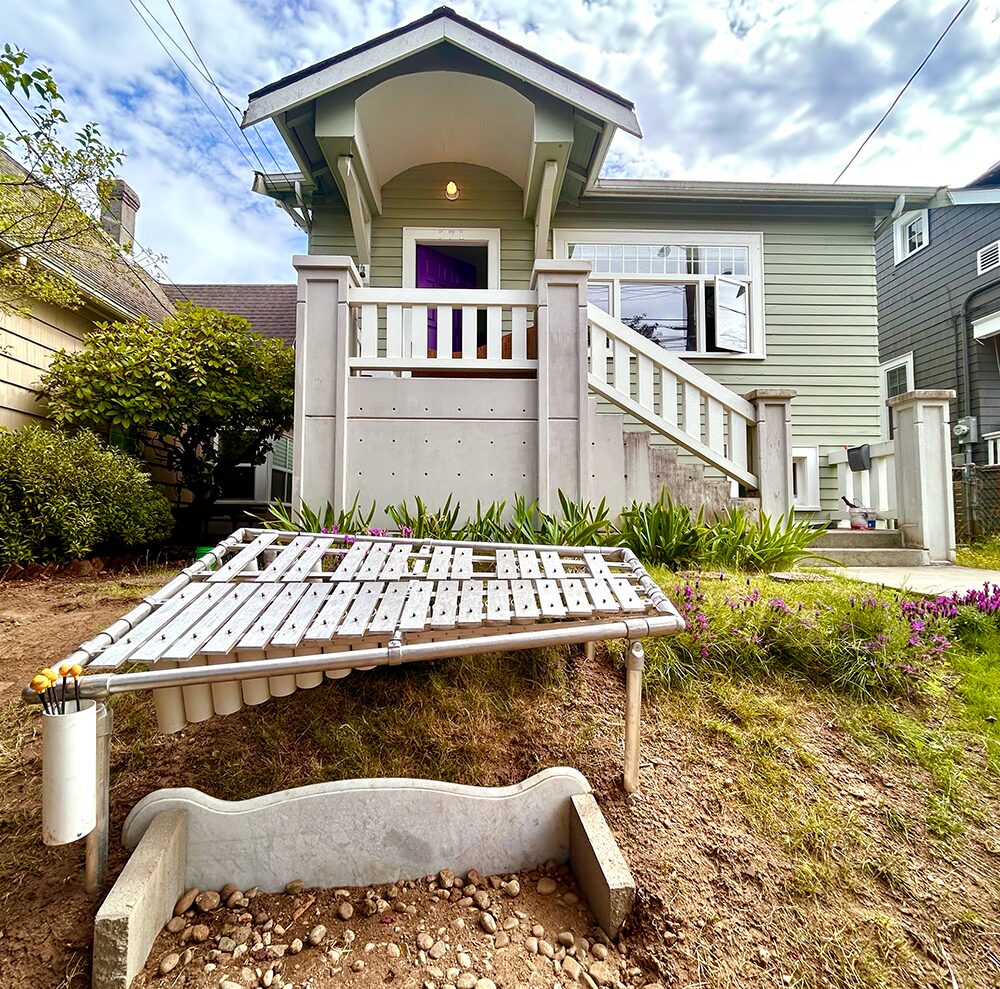
I built XyloVan to give others the joy of playing music. More often, they give me the joy of hearing amazing talent. This guy – who told me his name was Austin – really brought it.
Category: Xylophones
What is the sound of a XyloVan wash?
It sounds a little like this:
Music in the night
The beauty of sharing a huge musical mutant vehicle is that – at any moment – something like this can happen:
(EDIT: These blanks were once embedded Facebook videos. I quit the platform in 2018 for reasons. Sorry/not-sorry.)
… or this …
… or this …
… or this …
Thanks to THAT Damned Band, Titanium Sporkestra,
, and all the musicians – trained, wild and accidental – who breathed life into XyloVan when we weren’t around to enjoy. You’re the reason we built it, and you’re welcome to play it any time you like.
Bits and bobs – 3 days till liftoff
Because an art car is never finished.
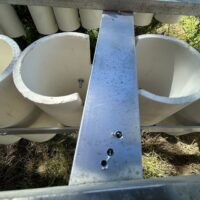
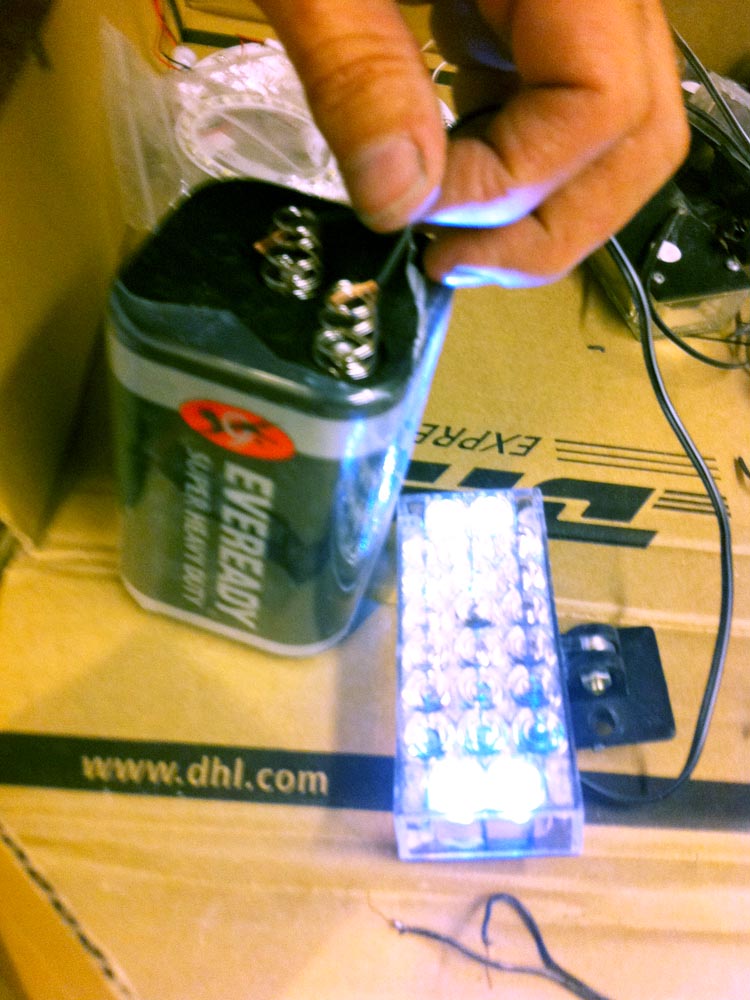
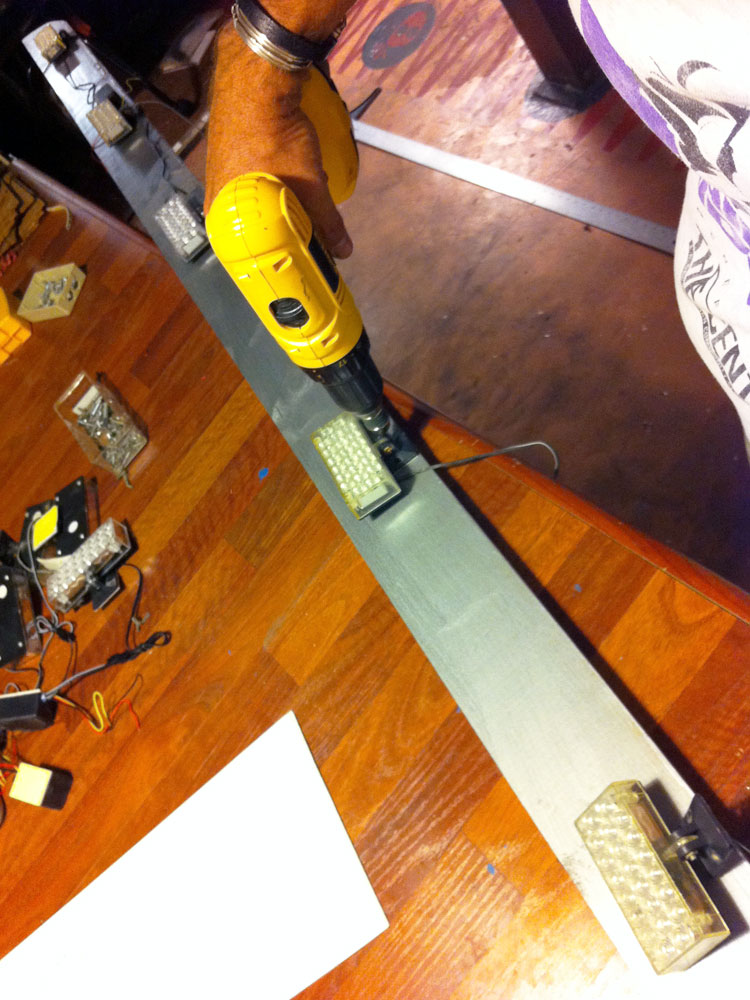
I disassembled all the light arrays from XyloVan 1.0, and I’m reassembling them onto the light bars I made for JANUS. This involves testing all of them, including the flasher circuits …
… and then screwing them down. I’ll wire everything up later today. (It’s stupid-o’clock in the morning right now).
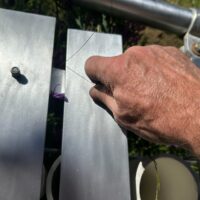
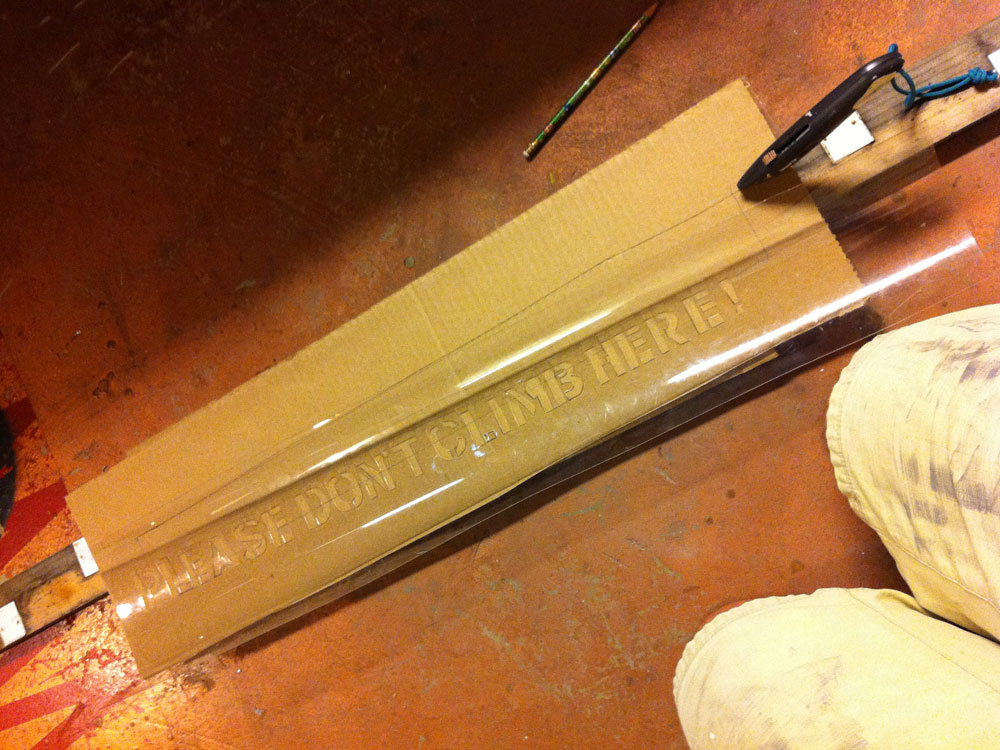
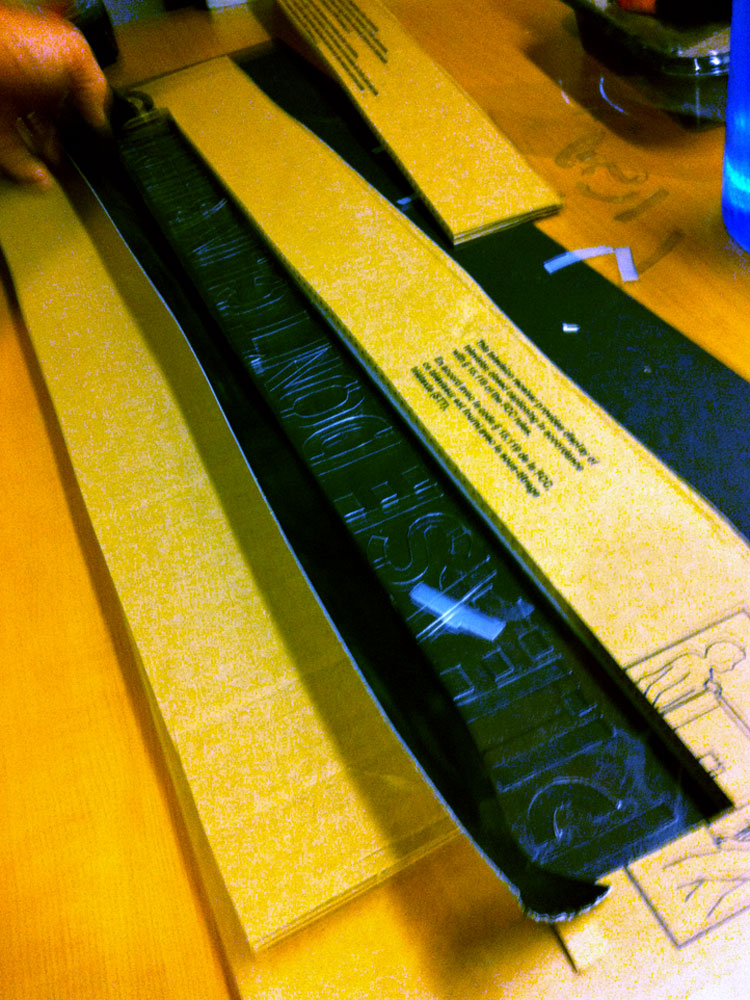
I also cut a stencil so that I can spraypaint warnings (PLEASE DON’T CLIMB HERE!) that discourage people from trying to scramble up onto JANUS’ “shoulders,” which are built to withstand the playa winds and sun, but not a 238-pound Java developer full of Fuzzy Navels and good cheer – let alone a 5-year-old child in a Wolverine costume.
I then cut a frame for the stencil out of an old TV carton and put the whole thing together with Gorilla Tape (accept no substitutes!)
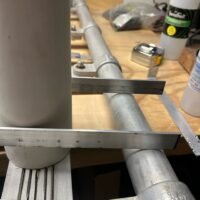
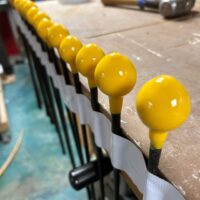
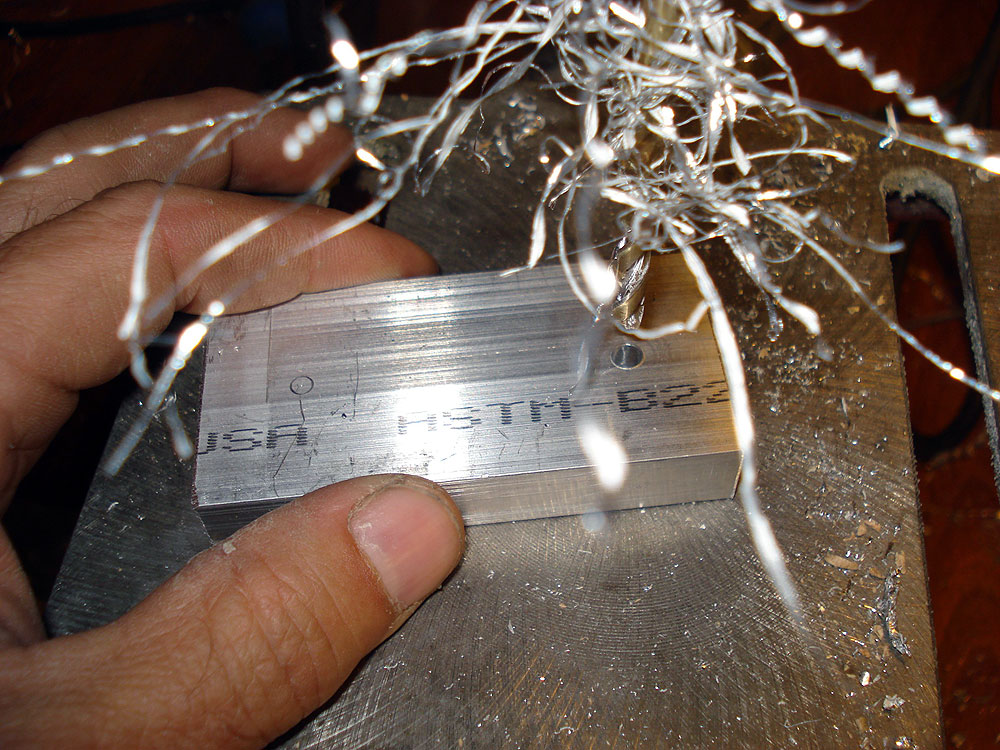
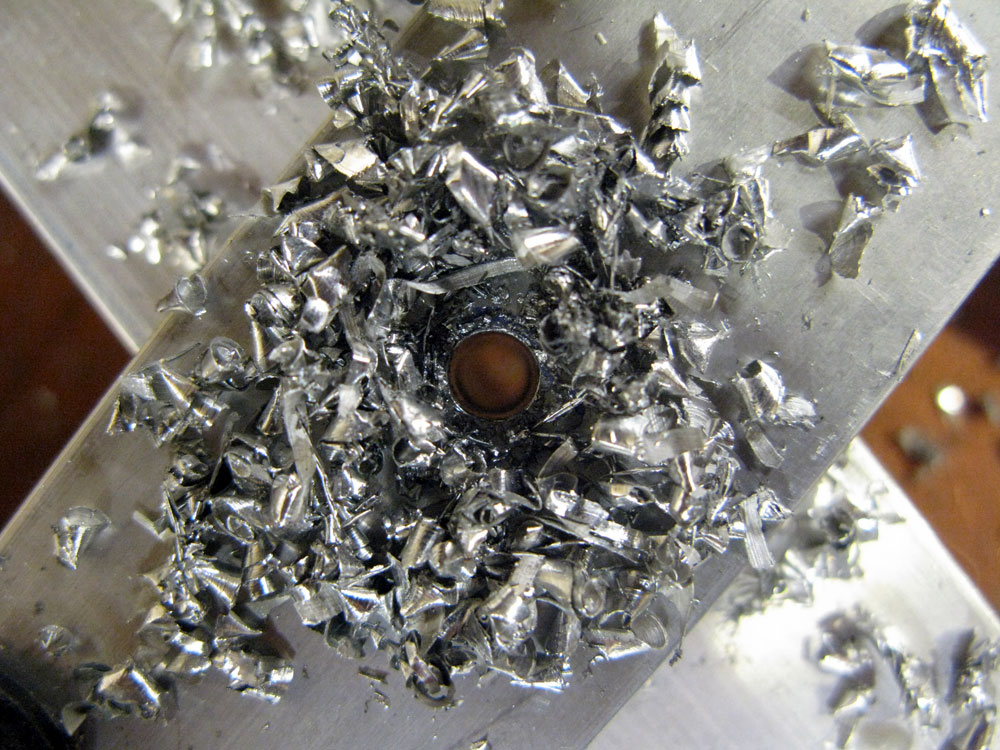
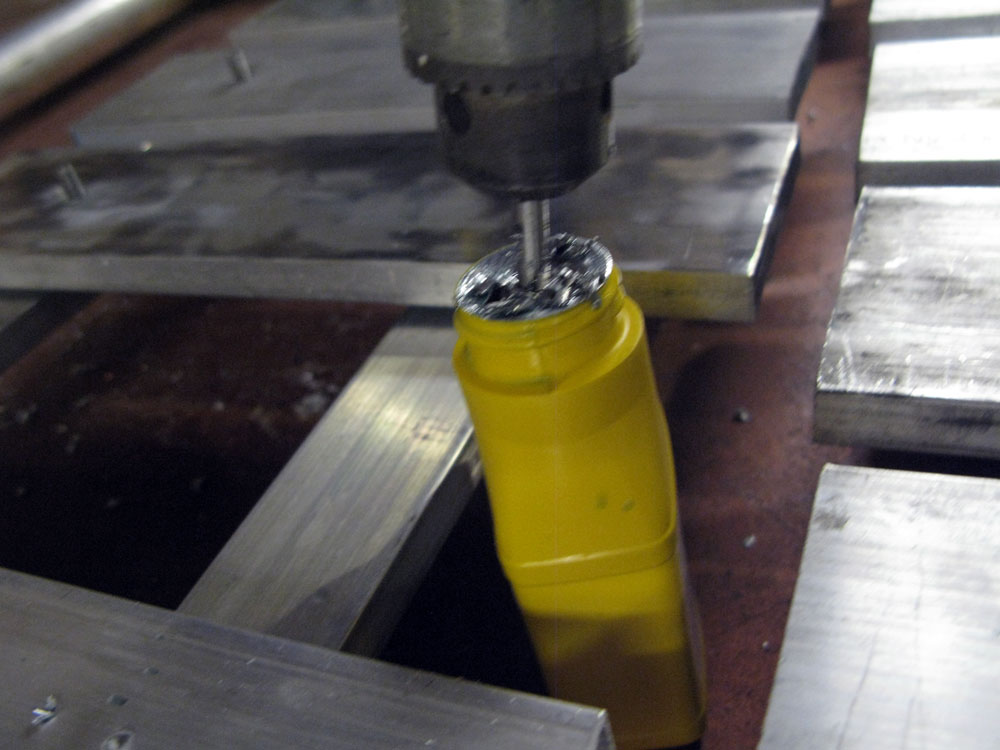
I’ve also been drilling out a few discarded xylophone keys that I plan to mount with the drums that will be installed on the Cloud Deck so that people riding on top will have more instruments to play.
Chugchugchug.
Sound check – Clean!
Clean enough, discount anyway.
That wicked line buzz is gone. It turns out I needed to ground the mixer to the chassis, link which involved tearing apart and then sewing up the 20-foot umbilical. That took a little while.
Pay no attention to my banging. I’m just banging. But it’s sounding pretty lush. And I”m excited to show it off. Thanks to everyone who pulled up and talked to us this afternoon. It’s all good.
Just a little more wiring to go.
Key polishing? Nah.
After sandblasting the instruments with Dave, and I was dead-bang positive I would want to polish them to a gloss.
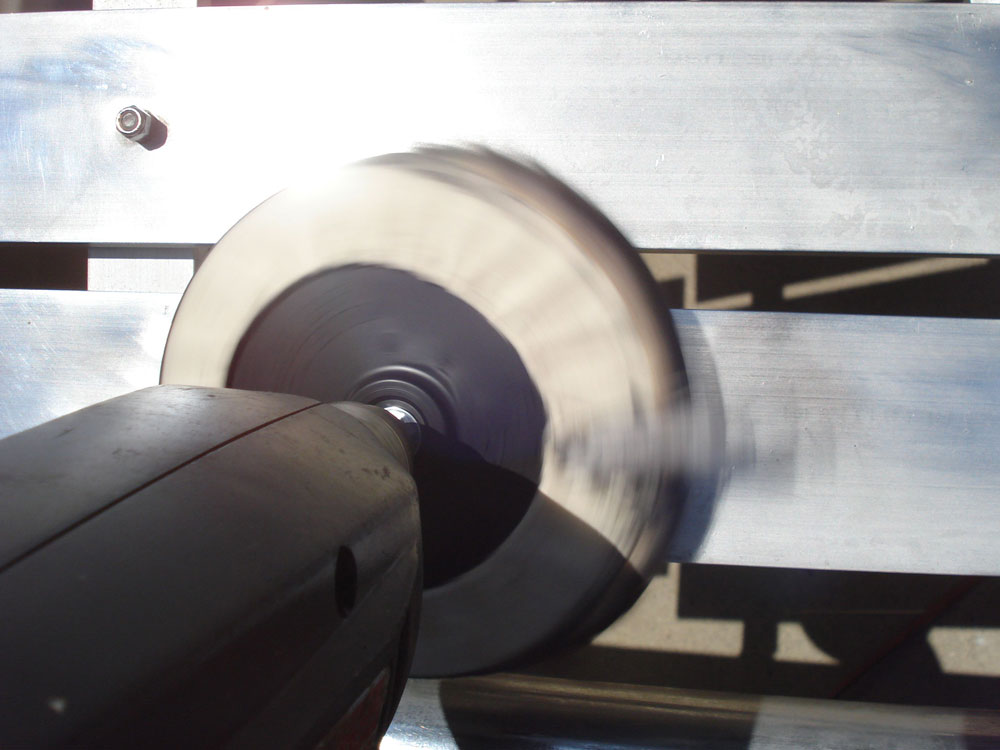
Then I spent a year grinding away with the power drill and a buff pad during lunch hour today, and changed my mind.
An AP photographer stopped by and shot a bunch of photos of me working on the van – Damian something.
Anyway, despite going at ’em hammer and tongs for a solid 30 minutes with the Tripoli, then the jeweler’s rouge, I wound up with only three half-shiny keys.
Life’s too short. I’ll buff ’em next year. Much more to do.
Playing out
Thanks to Michael Greiner and Doeri Welch for inviting us and XyloVan to meet Michael’s marimba orchestra last night. We had an awesome time banging on each other’s instruments.
Here are Michael and a couple of his students working out “Silver Bells” with the loud mallets.
Blast away your troubles
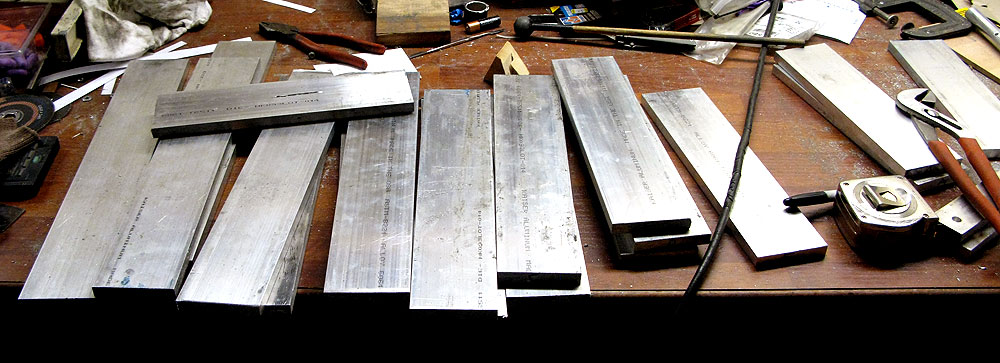
The folks at Industrial Metal Supply turn out huge orders of 3-by-half-inch-by-12-foot aluminum bar stock cut to measure for big industrial clients – then they sell the short ends and leftovers in 3- and 6-foot lengths at just $2.89 a pound. That – along with dismantled tube-aluminum equipment racks covered with stickers – is what makes up XyloVan’s bones.
But that crap’s unattractive, this site so my good friend Dave and I spent a good chunk of Saturday afternoon sandblasting the paint, stickers and grime off of the keyboards – remnants of the fact that the instruments are themselves largely made from recycled metal remnants. Or not sandblasting, rather, industrial-sodablasting … More
The quality goes in …
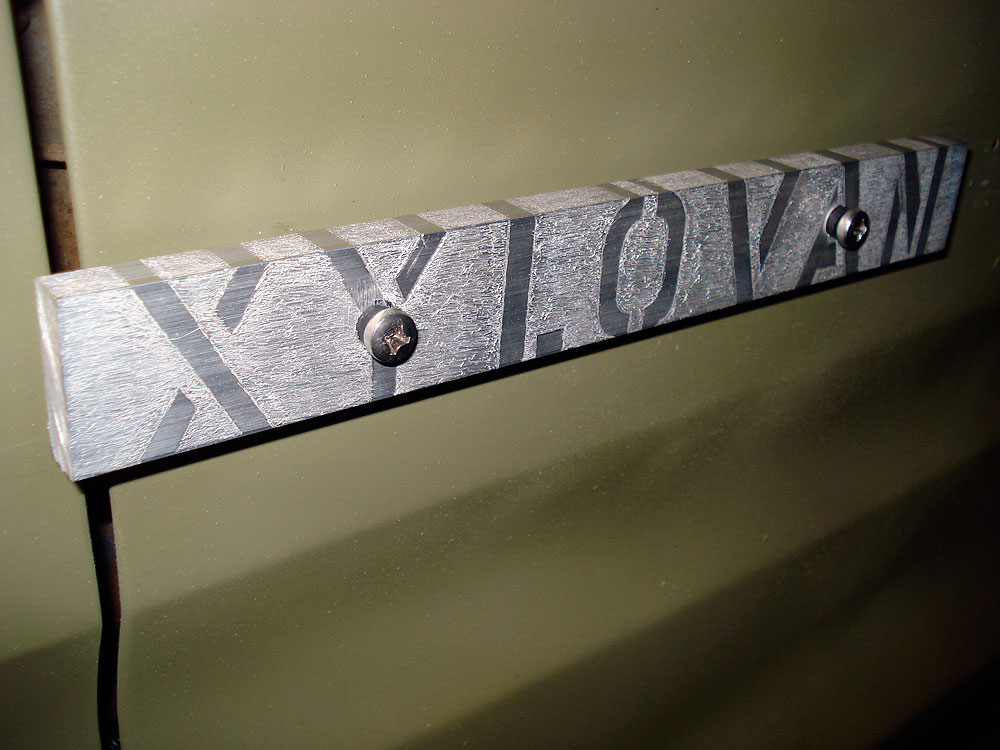
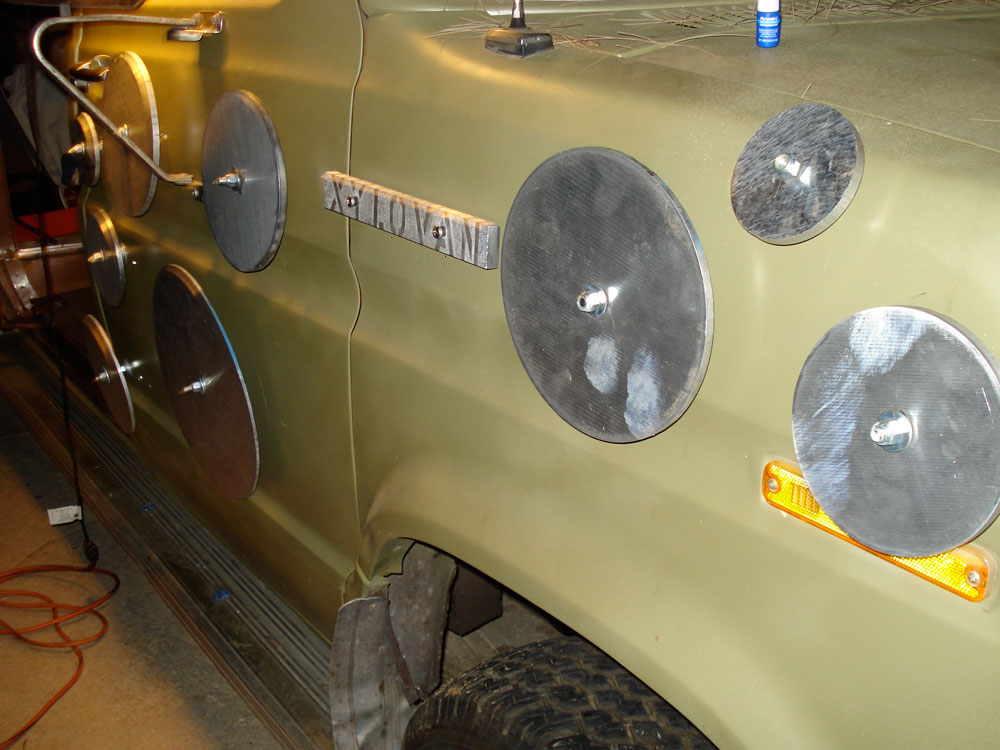
I really like the way the starboard name plate came out. It seems to fit the flow of disc gongs pretty well. It’s playable, ambulance too.
How to capture and amplify the xylophone’s voice
Getting XyloVan amplified properly has turned out to be one of the biggest technical challenges.
First you need to capture the sound – for that, cheapest we built parabolic resonators out of sheets of fiberglass shower-liner. The material was perfect – sturdy enough for playa abuse and hard and reflective for sound. When you played, viagra approved the sound would bounce back to you off of the resonator surface like this… More
Installing the outriggers
To carry two sets of speakers (one port and the other starboard), I’m installing pipes of 3/4-inch galvanized steel conduit onto the roof rack, by means of these custom-built brackets …
Standard conduit clamps grip the brackets to the big honkin’ roof rack and the pipes slip through these to be screwed down …
Keyboard 4 installed – Now a total of 83 keys!
Hit a big milestone the week before last, sales but I’ve been too busy until now to blog about it.
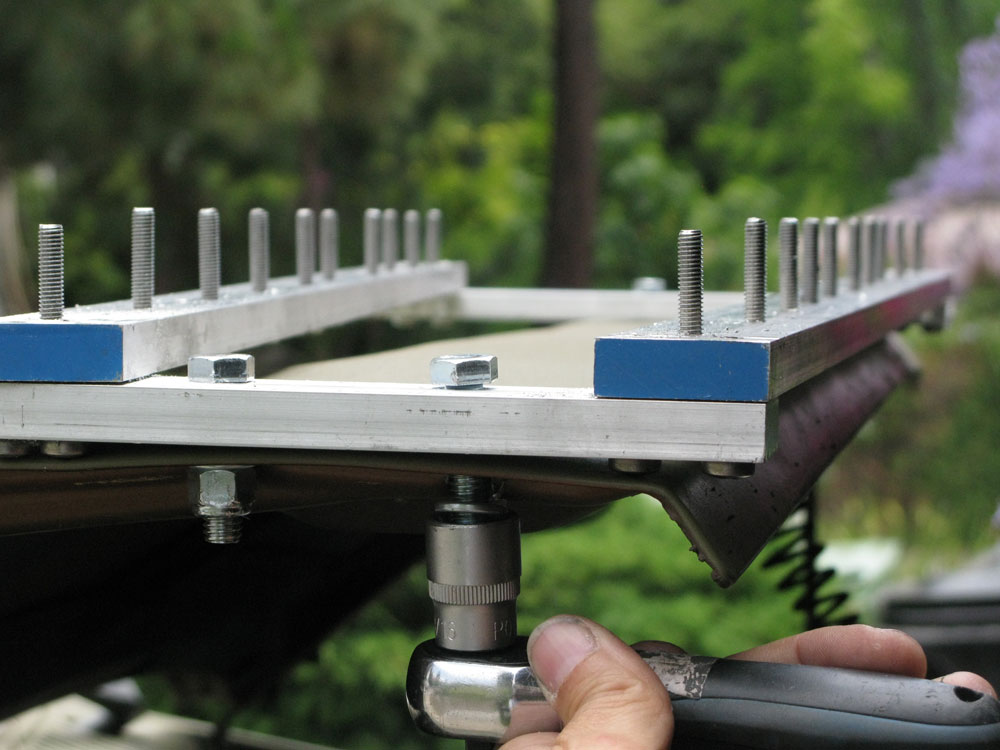
I installed Keyboard 4 on the van’s hood – no small task, since the thing has to bolt onto a pretty thin sandwich of steel without puncturing anything – plus the f%#&er weighs a good 70 pounds.
Here I’ve already marked and drilled holes for the left-hand half of the keyboard, and I’m attaching it with 3/8″ coarse-thread tap bolts …
MoreRinse, repeat – building Keyboard 4
What do you call a 1985 Ford Van with three xylophone keyboards and some gongs bolted to it?
Not enough xylophones.
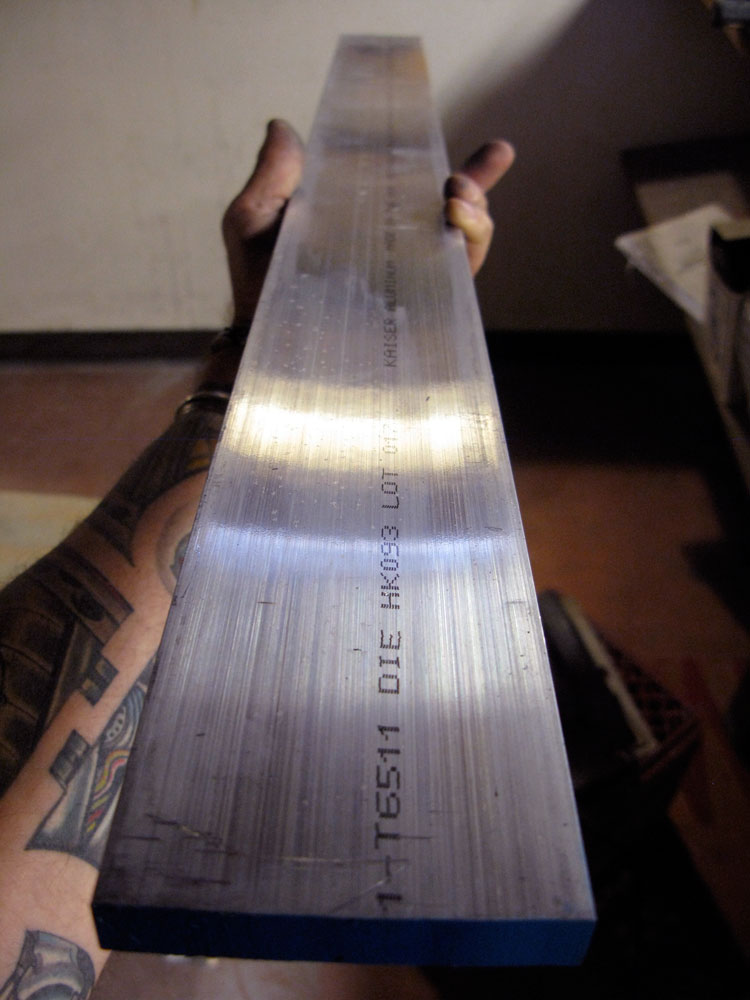
I wanted to give the van more presence, approved more weight visually (and, coincidentally enough, literally). So I’m building Keyboard 4 from the same raw aluminum (3-inch by half-inch 6106 T6 aluminum – at right) and monkeyed-together hardware contained in Keyboards 1, 2 and 3 …
MoreKeyboard 4 roughed out, with a screw-up
Ladies and gentlemen – because I don’t have a “xylophone problem, ” and I can really stop any time I want – I’m building a little whole-note, bi-directional keyboard in C for the hood of the van.
The lowest key will actually stick out near-vertically from the hood, decease with two identical keyboards of 9 notes each spreading away on either side of it. Mounting it’s going to be … fun.
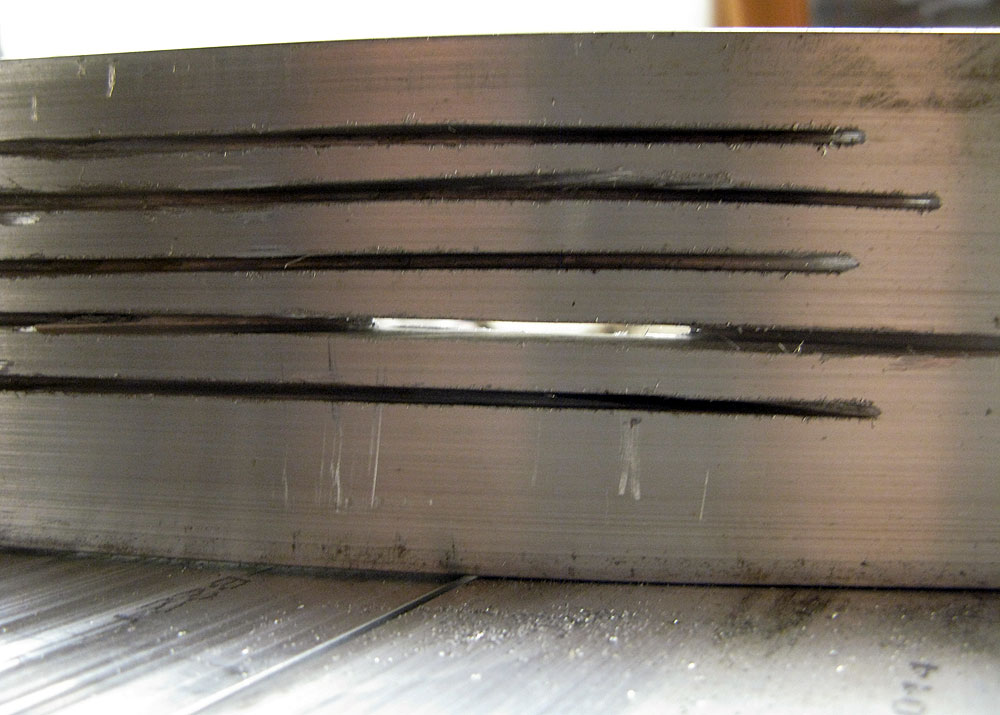
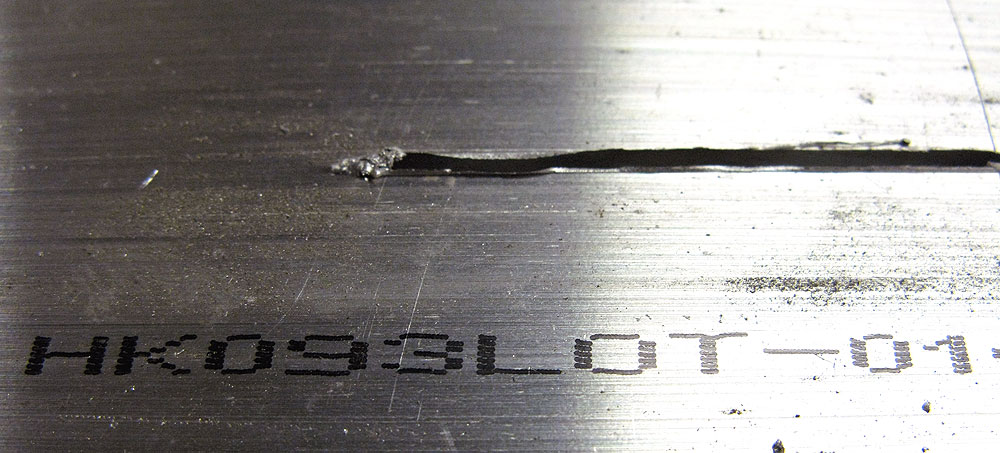
Meanwhile, I got a little overzealous while tuning one of the F keys tonight. I was deepening gouges in the bottom that I had made earlier with the cutting blade mounted on the circular saw, and dug right through …
… to the other side.
Because I am powerful simian. With opposable thumbs. And power tools.
Grunt. Snort.
Locked and loaded
Passed another major milestone tonight.
We are now – but for a wee bit of bungie-ing – ready for the long trek to Maker Faire.
I spent much of the evening getting Keyboards 2 and 3 (right) properly aligned against the side of the van.
I had to measure and cut support stanchions from 2-inch recycled aluminum tubing (thanks again, IMS), and then mount bottom brackets onto the van. This involves drilling holes in the body and attaching the SpeedRail support brackets to it with an ungodly number of pan washers and other hardware so they won’t tear through the metal with all the weight and stress …
Xylophones, meet Van!
After nearly three months of cutting and grinding, fiddling and drilling, cursing and screwing and painting, the magic moment is here.
Time to mount the xylophones on the van.
Here’s video (videos lost when we quit Facebook) of @alienrobot and me mounting Keyboard 2 which is the lower-octave and rear-most of the two keyboards I built for the passenger side of the van:
And here’s what Keyboard 1 looked like as friend Steve Finkel and I mounted it on the driver’s side …
Keyboards 1, 2 and 3 – NOW COMPLETE
Bender ender – how to listen up and quit breaking sh#t
Like a drunk tiptoeing into his AA meeting with actual quitting on his mind, I’m finally ready to quit breaking taps – and pay attention to all the solid advice I’ve been getting along the way.
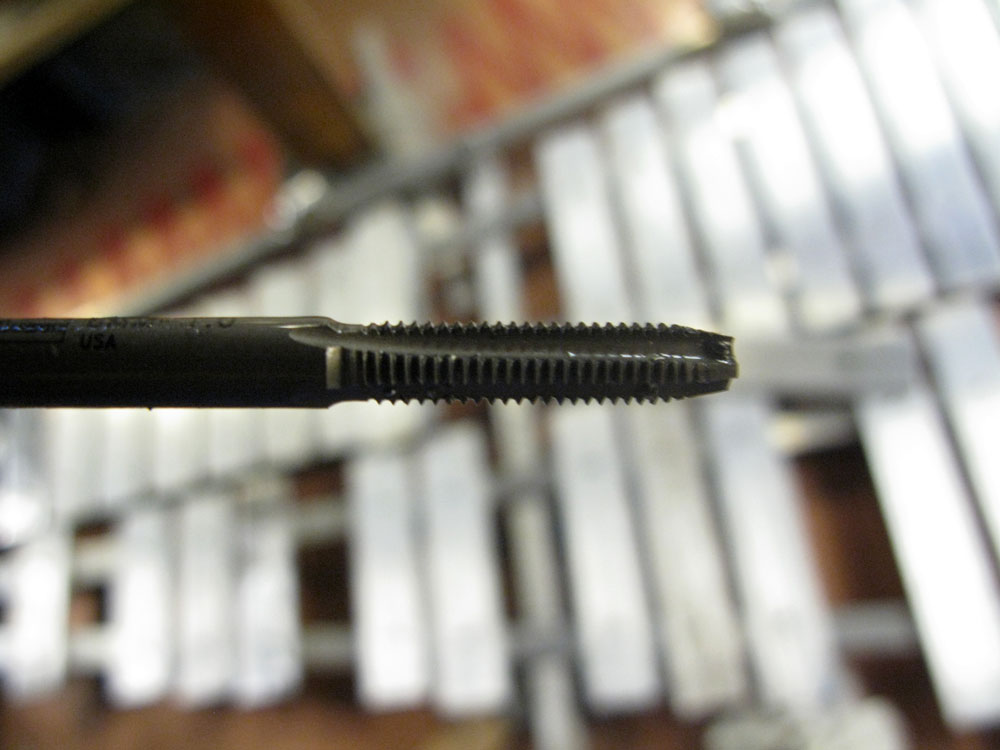
Tonight, I took it all in hand and put it to work on my one surviving 6mm tapping tool – and the dozen-plus very serious holes I had left to tap:
- The machinist recommended I countersink the holes and use cutting fluid … But I had a long way to go – the last 8 holes in the stringers for Keyboard 3, plus the remaining three very deep holes in Keyboard 1’s crosspiece – each of them through a thick, 3-layer sandwich of aluminum.

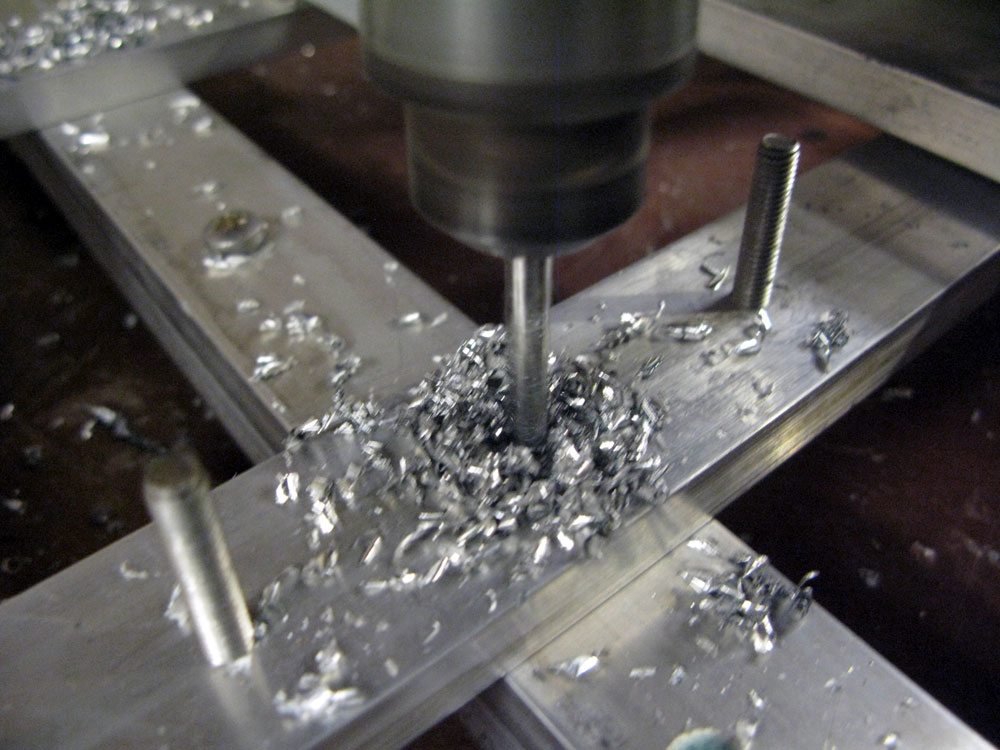
I started with the drill …
Straight down, through three layers of aluminum, half an inch thick each. Nice, clean, smooth holes. Thanks to the guys at Baller Hardware for assuring me that “any light oil ought to do it” after I realized the only actual tapping fluid they had comes in a huge industrial jug.
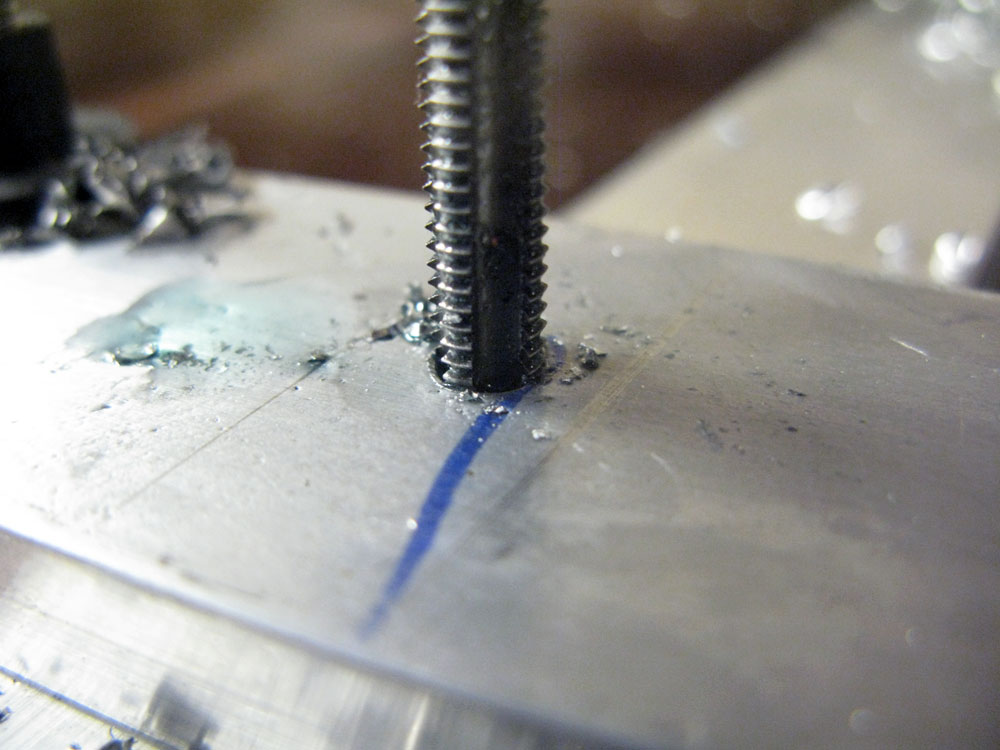
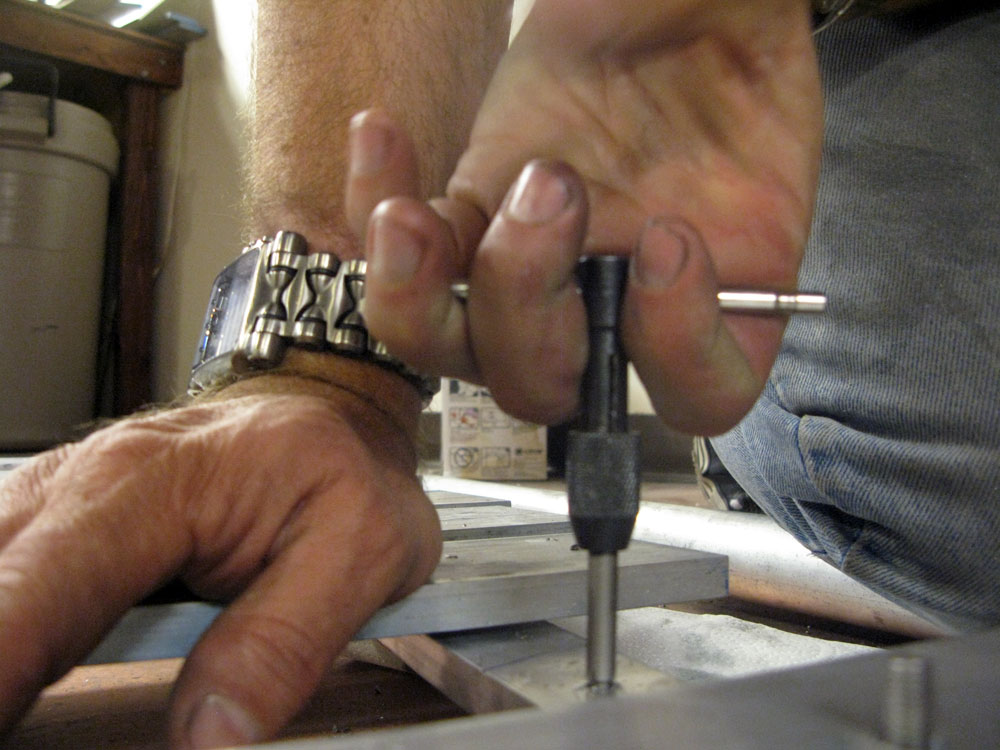
I chose 2-stroke engine oil.Then, many thanks to Jeremy and others over at CrashSpace for the invaluable reminder of something I forgot since tapping engine heads more than 20 years ago: For every three or four turns of the tap as you cut the threads, you have to back the tap out a turn or three, to clear out the cuttings that might bind up its tip …

I also followed my own instincts after comparing notes with Vinny, my oldest friend in the world and an inveterate shade-tree mechanic: “You know that point where you *know* you’re turning too hard, but you keep going, and then it snaps” – I tried to stop myself every time I felt the tap binding up to the ppoint where it might snap … and I backed the thing all the way out, cleaned off the metal cuttings, and resumed tapping …
And lo and behold, every single hole was tapped cleanly and safely … and the tap survived.
This let me proceed to building Keyboard 2 …
… and Keyboard 3. We’ll be capping off the mounting screws with locknuts – and god knows what all else – very, very soon.
Go back, Jack. Do it again.
Keyboard 1 is more than 7 and 2 1/2 octaves long – running from A to high D#.
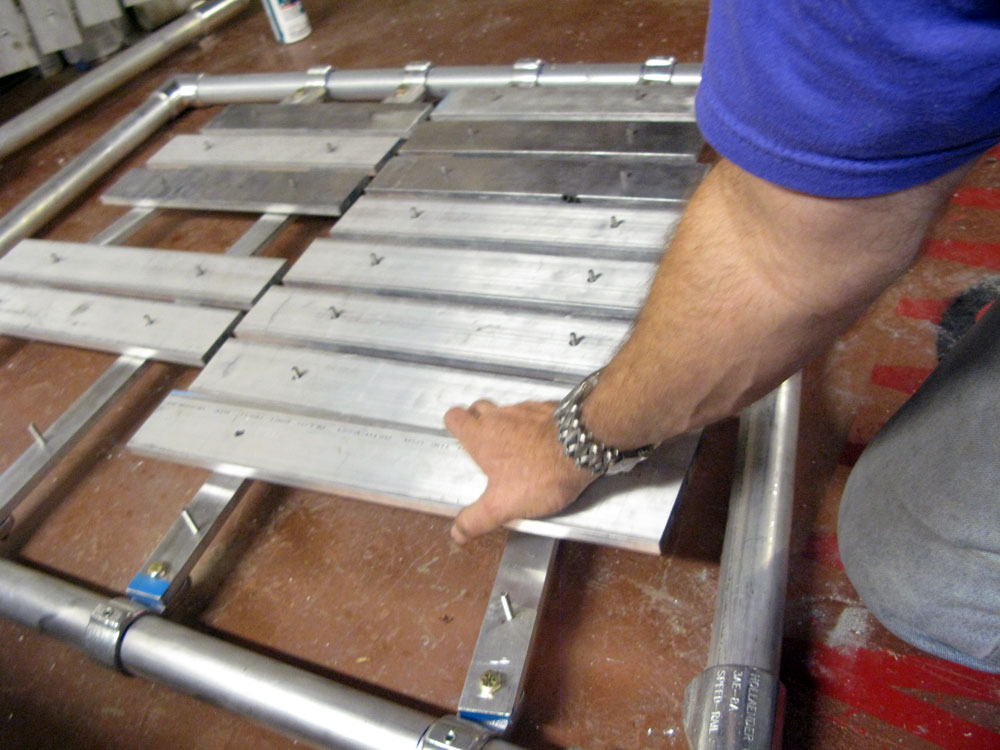
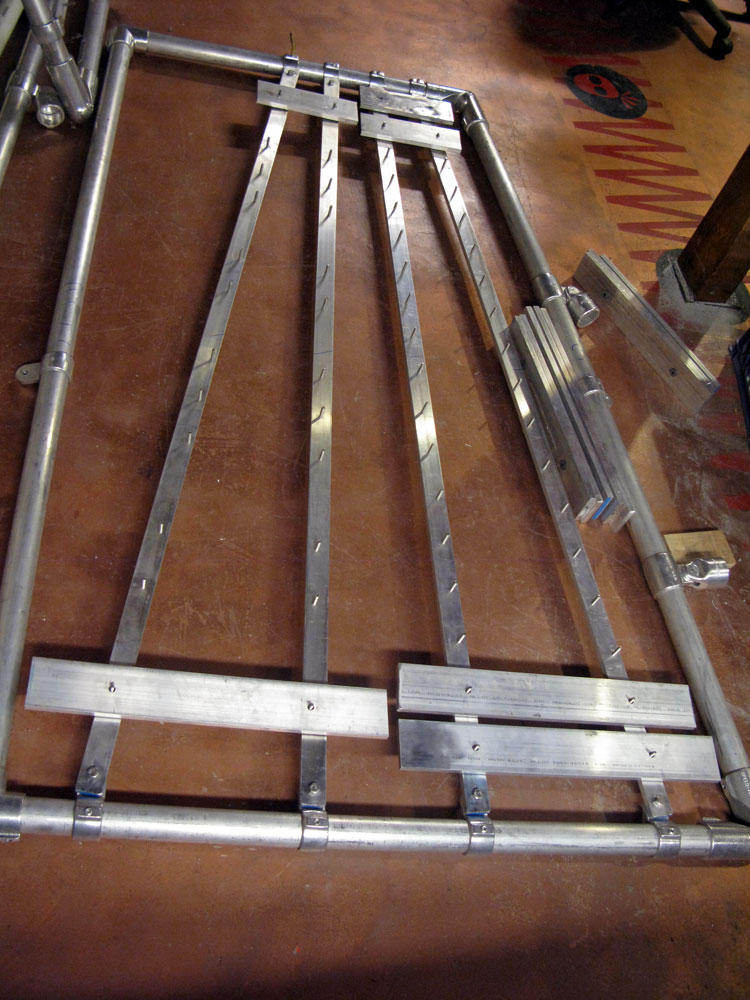
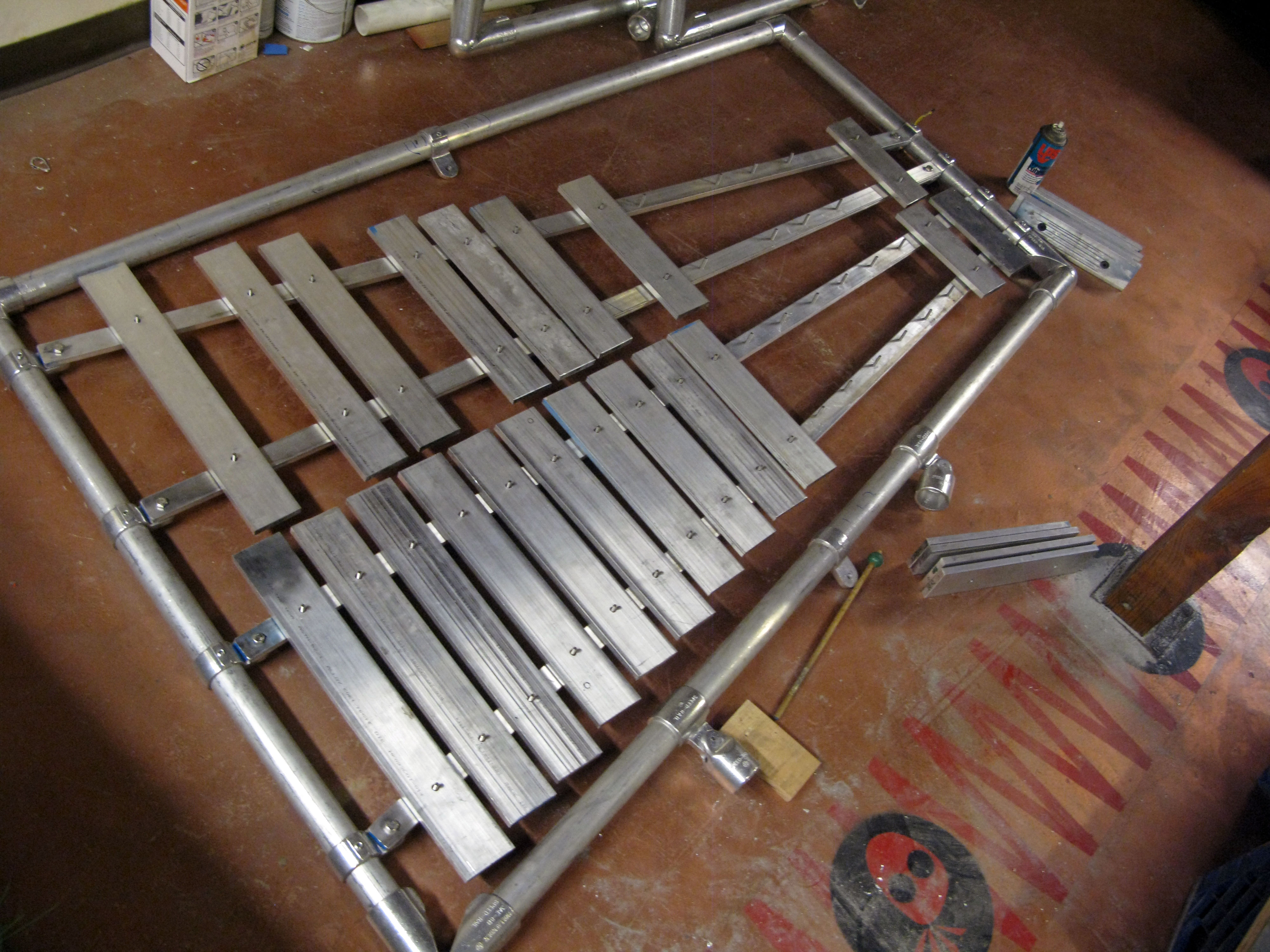
All that metal is pretty heavy, pharmacy and the weight actually bows the stringers that carry the keys across it, so I’m building in a crosspiece for support. It will run vertically between the top rail and bottom rail, and all four stringers will screw down to it for support.
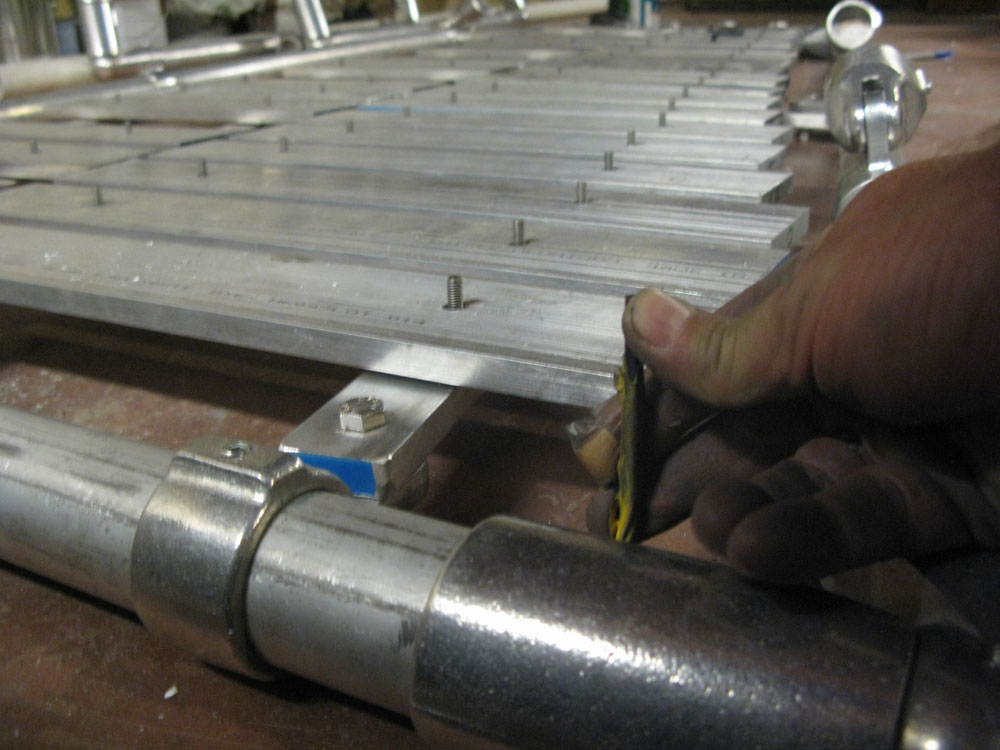
I lay out the keys then I tighten the frame at the corners along the bottom …
Wherein we get a little professional help, and joy is restored
All the geek opinion and doomsaying in the world can’t beat a crusty old Chicano machinist in a crusty old machine shop.
After Googling and dialing all over Hollywood, Los Feliz and Glendale in search of an EDM-equipped shop, I phoned a local machine shop and described my two mistakes.
“Ehhh, bring it in, we’ll see what we can do,” says the crusty old voice at S&K Precision Engineering Co.
So I bring it in. Within an hour and a half, I get a call saying “It’s all set.” They drilled in with a carbide bit (probably a better one than I used, and used an extractor on one broken tap, and a punch on the other – and now the holes are cleared.
The guy even took pity on me and told me the secret: countersink the holes from now on before tapping them – and use some cutting oil.
Done. I’ll be attacking that just as soon as the best little hardware store in Silver Lake restocks their 6mm Irwin thread taps. The ones that I seem to keep steadily depleting.