 The voice of an acoustic bass (I learned though copious reading) is born of two primary factors: vibrating strings moving the wooden face, and the resulting sound waves escaping its body.
A standard bass sings through scallopy-looking F-holes.
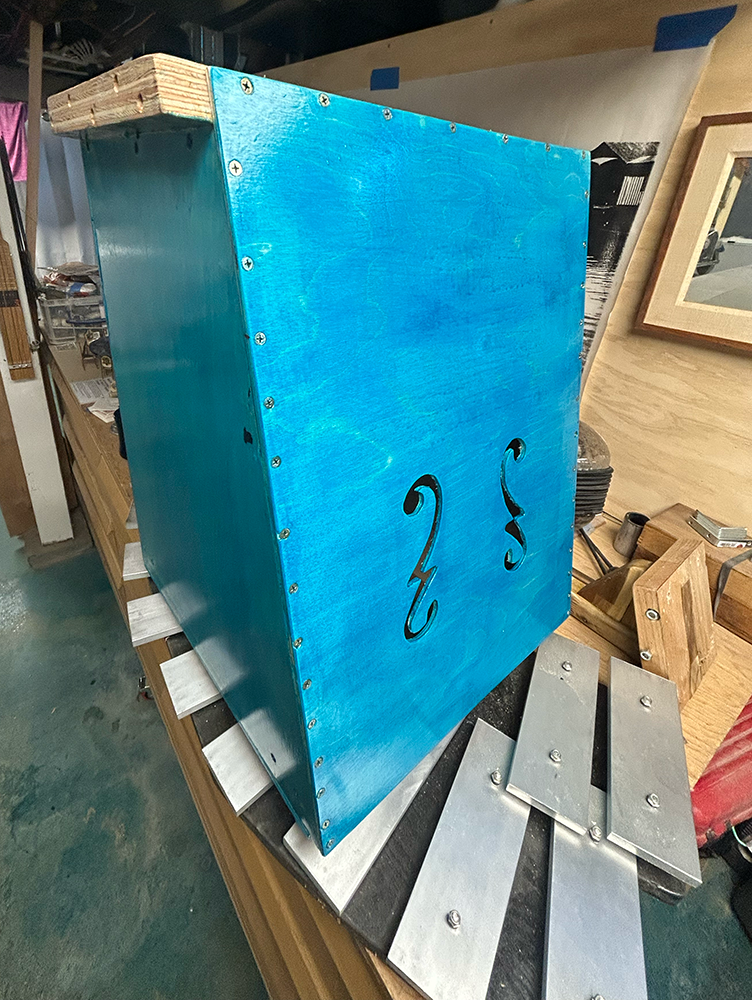
So – ever fond of tradition (and/or fancypants elegance) – I traced an F-hole pattern that I liked onto my bass box’s 6mm birch plywood face, and then started cutting with a roto-zip bit on my Dremel.
One word: nerve-wracking.
 Having spent the better part of three weeks working out all the parts of the standup bass, including at least a week fabricating the box and its fittings, I couldn’t afford to f*(# it up.
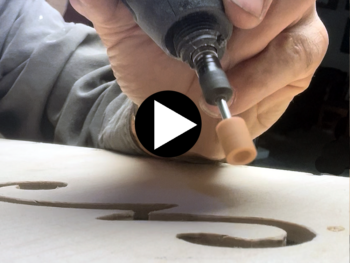
Once the cuts were done and my heart rate returned to normal, I used a sanding bit to soften the edges of the holes (video).
I then colored the plywood with my favorite water-soluble turquoise wood stain, and gave it 7 coats of gloss urethane, which should hold up for a while indoors or out, since it’s *under* the table top.
Next project – finishing the table top itself!