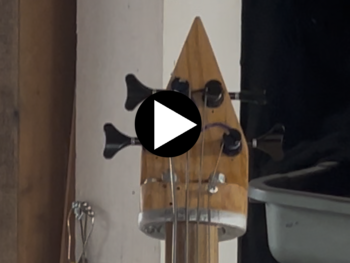
 One does not simply walk into Mordor.
Nor does one simply create the neck of a double bass. This Jam Table component does a *lot* of heavy lifting for this very complicated type of instrument, so it has a lot of structural and material requirements in order to work properly.
Full disclosure: I am not a luthier (as I have already made pretty obvious), and I have no earthly idea what I am doing here.
After studying numerous photos and architectural drawings of double-bass viols, I knew I would need a reliably sturdy way to keep the neck at a good playing angle so it can do its job – just as I would need the instrument’s body at a steady angle.
The table top would be sandwiched between them, with the strings stretched from the peghead through a hole cut into the plywood to the bridge and tailpiece attached to the body below.
In theory, anyway.
For the neck itself, I cut about 40 inches of the scrap of 1.75-inch-thick acacia-wood butcher block left over from building our countertop, then trimmed away the outside edges with a handheld jigsaw clamped to the bench. Whee.
Then I used coarse 80grit sandpaper on an orbital sander to whittle the living bejeezus out of it.
By the time I was done, I had shaped something resembling what the internets tell me is the approximate thickness, length, and
taper of a double-bass neck and fingerboard. I think.
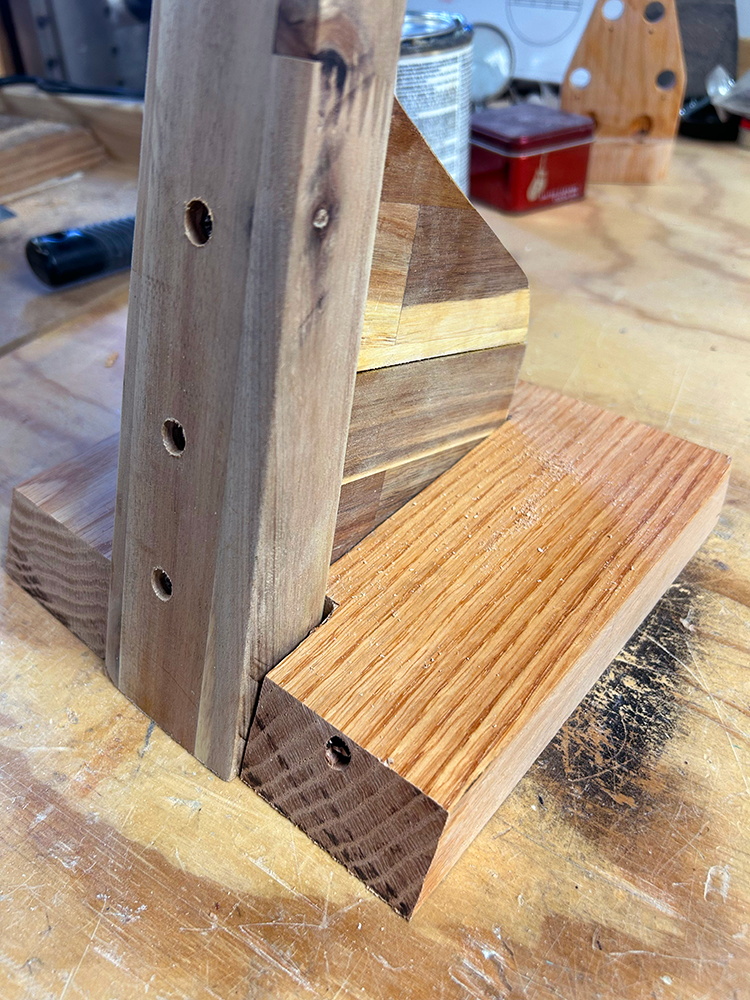
I fashioned a rear buttress for the neck from another scrap of acacia and screwed it onto the neck’s base. Then I carved out that assembly’s profile from another thick chunk of red oak, and I bolted the whole thing together with lengths of all-thread run parallel to the table surface through holes I drilled into the edge of the oak scrap and the base of the neck assembly.
Next up was the peghead. I salvaged the oak peghead from the failed Tube Bass, and flipped it over to put the machines at the proper level to take tension from the nut.
Now the tricky bit – attaching it to the top of the neck.
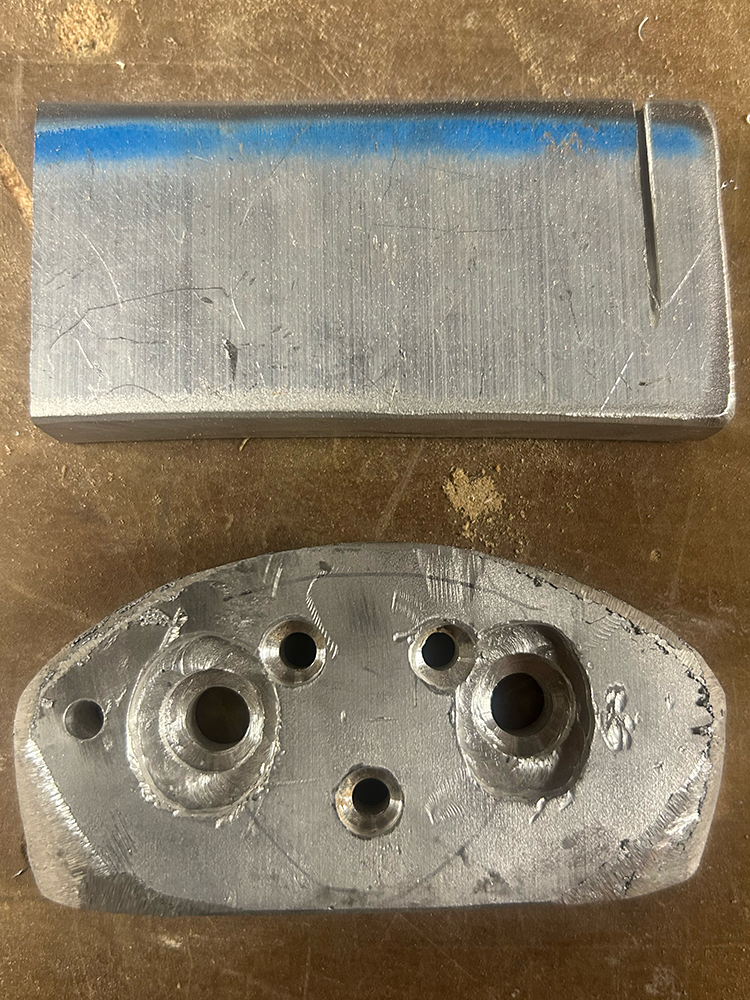
The best solution was to fashion a plate out of raw aluminum scrap that I’ve kept around since building XyloVan.
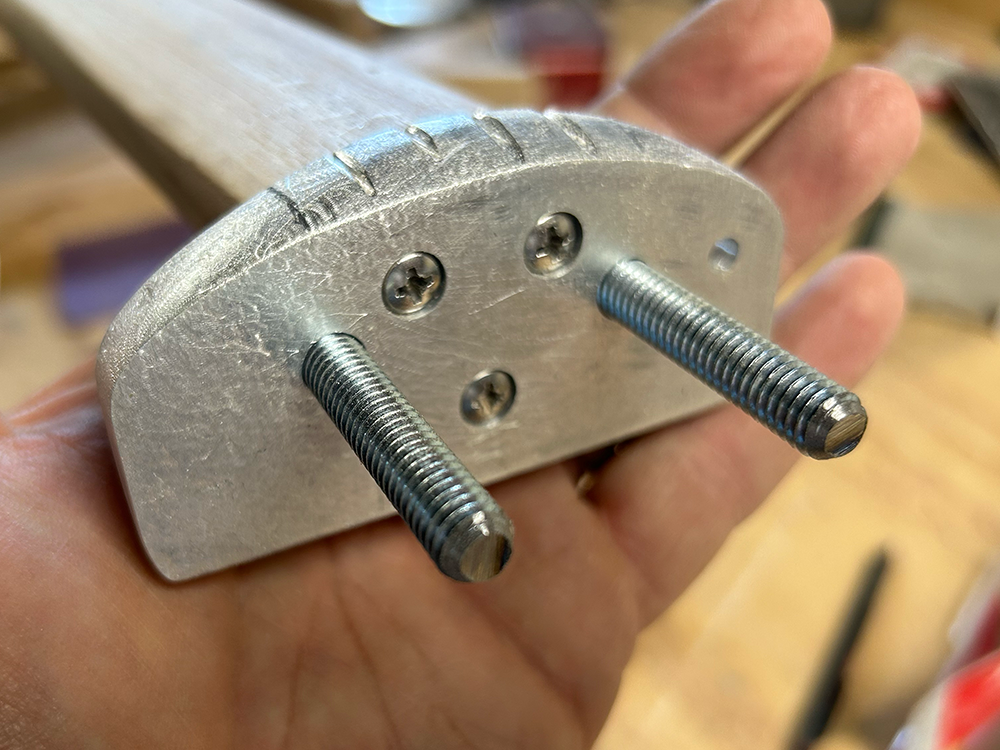
I spent quite a few hours machining this thing – drilling a pair of holes that align with existing holes in the peghead – and a new set of holes allowing three screws to attach it to the neck.
I had some oval-profile bolts kicking around that could hold tension without being spun. I just had to machine out holes to accommodate their weird, flat heads.
Using it as a drill template, I drilled holes into the neck, then inserted three stainless-steel screws that I hope I never have to see again – and screwed/bolted the entire thing together, finishing it off with 5 coats of exterior urethane.
It wound up looking like this – ugly, but fully functional: